
TL;DR
Bed bug infestations are increasingly common in homes and hotels, causing itchy bites, sleep disturbances, and potential health concerns. This comprehensive guide covers how to detect bed bugs through visual inspection and common signs, identifies health risks and symptoms of bed bug bites, and provides both DIY treatment methods and professional pest control solutions. Learn the step-by-step process to inspect your bedroom, recognize infestation indicators, and choose between home remedies and expert bed bug control services in Delhi and Chandigarh.
Table of Contents
1. Understanding Bed Bug Infestations
2. How to Detect Bed Bugs in Your Home
3. Signs of Bed Bugs You Shouldn't Ignore
4. Health Risks and Bed Bug Bite Symptoms
5. DIY Bed Bug Treatment at Home
6. Professional Bed Bug Pest Control Solutions
7. Prevention Tips for Long-Term Protection
8. Frequently Asked Questions
9. Conclusion
Waking up with mysterious red welts on your skin? Finding small dark spots on your mattress? You might be dealing with one of the most persistent household pests: bed bugs. These tiny nocturnal insects have made a significant comeback in recent years, affecting homes, hotels, and apartments across India, particularly in metropolitan areas like Delhi and Chandigarh.
A bed bug infestation isn't just an inconvenience, it's a serious problem that can impact your sleep quality, mental health, and overall well-being. According to pest control industry reports, bed bug cases have increased by over 300% in the past decade [Source: National Pest Management Association]. Whether you're dealing with a minor issue or a full-blown infestation, understanding how to identify, treat, and prevent these pests is crucial for protecting your home and family.
Understanding Bed Bug Infestations
What Are Bed Bugs?
Bed bugs (Cimex lectularius) are small, oval-shaped insects approximately 5-7mm in length, about the size of an apple seed. These parasitic pests feed exclusively on blood, preferring human hosts but occasionally feeding on pets. Unlike many other insects, bed bugs don't fly; instead, they crawl quickly across floors, walls, and ceilings.
In my 15 years working with Skuas Pest Control, I've witnessed how bed bugs have evolved to become more resistant to common pesticides. They're expert hitchhikers, spreading through luggage, clothing, used furniture, and even backpacks. This adaptability makes them one of the most challenging pests to eliminate without professional intervention.
Where Do Bed Bugs Hide?
Contrary to their name, bed bugs don't limit themselves to beds. These resourceful insects establish harborage areas in:
Mattress seams, box springs, and bed framesHeadboards and footboardsNightstands and dressers, particularly in cracks and jointsBehind wallpaper and wall hangingsElectrical outlets and switch platesUpholstered furniture, especially in seamsBaseboards and carpet edgesInside books, clocks, and electronicsBed bugs prefer environments close to their food source (you) and typically stay within 8 feet of where people sleep. However, in severe infestations, they spread throughout entire homes.
How to Detect Bed Bugs in Your Home
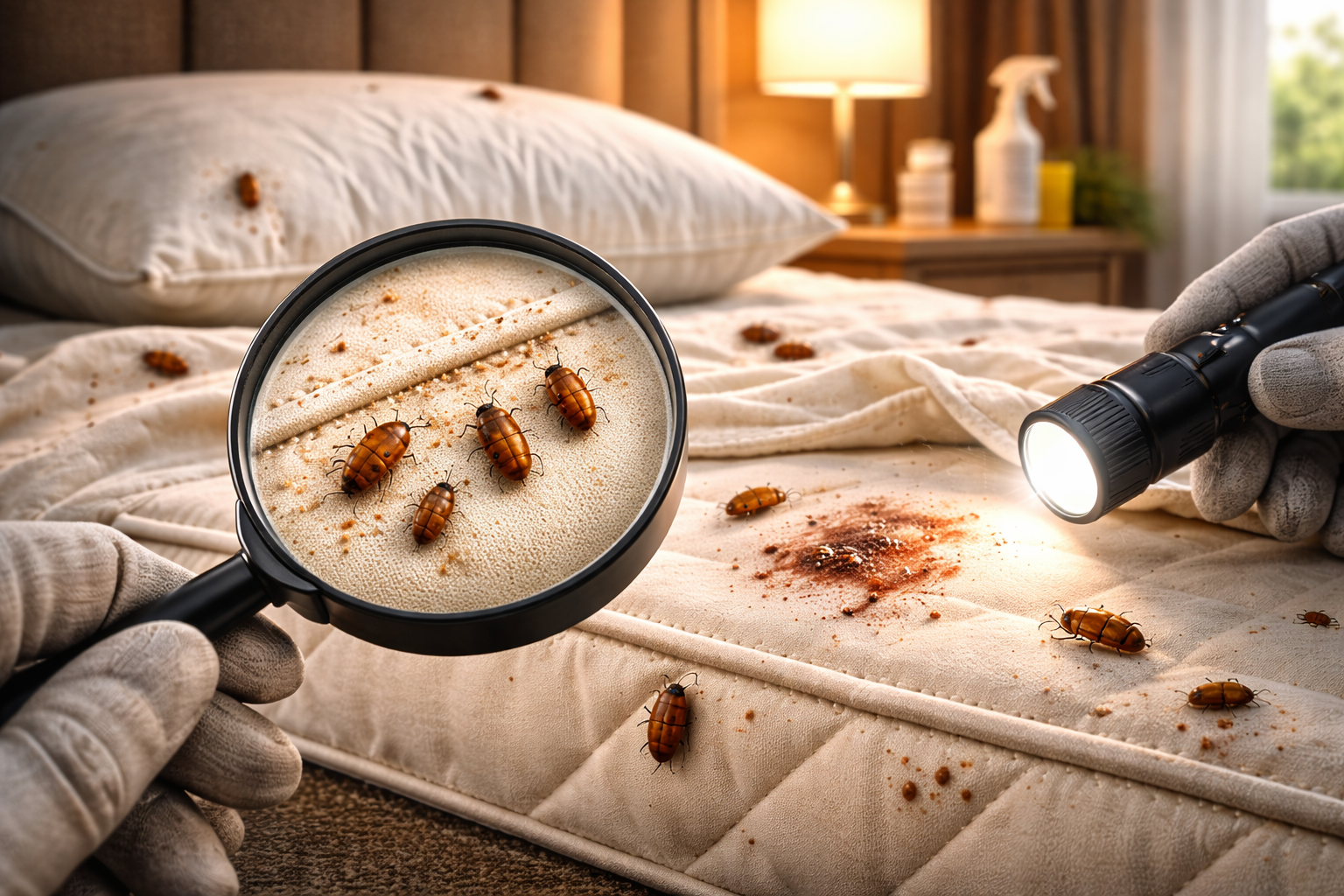
Step-by-Step Inspection Process
Detecting bed bugs early significantly increases your chances of successful elimination. Here's how to check for bed bugs systematically:
1. Prepare Your Inspection Tools
Gather a flashlight, magnifying glass, credit card or thin plastic card, and white paper or cloth. The flashlight helps you see into dark crevices, while the card helps you scrape potential hiding spots.
2. Start with the Bedroom
Begin where you sleep, as this is prime territory for bed bugs in bedroom areas. Strip all bedding and examine:
Every seam, fold, and corner of your mattressThe box spring, especially the underside and fabric coveringBehind the headboard (pull it away from the wall)Inside and around the bed frame joints3. Expand Your Search
Move systematically to furniture near the bed. Check nightstands by removing drawers and inspecting the interior framework. Examine upholstered furniture by running your credit card along seams to expose hidden bugs.
4. Inspect Less Obvious Areas
Don't forget to check:
Behind picture frames and mirrorsAlong curtain hems and rod bracketsInside electrical outlets (with power off)Throughout closets, especially in stored itemsWhat to Look For
During your inspection, search for:
Live bugs: Reddish-brown, flat insects (unfed) or balloon-shaped (recently fed)Eggs and eggshells: Tiny white or pearl-colored eggs, about 1mm long
Shed skins: Bed bugs molt five times, leaving behind translucent exoskeletons
Fecal spots: Dark brown or black stains that may bleed on fabric like marker ink
Signs of Bed Bugs You Shouldn't Ignore
Recognizing bed bug infestation signs early can prevent a minor problem from becoming a major crisis. Here are the telltale indicators:
Physical Evidence on Bedding
The most obvious signs of bed bugs appear on your sleeping surfaces. Look for clusters of small dark spots on sheets, pillowcases, and mattresses, these are fecal stains from digested blood. You might also notice small bloodstains on bedding from crushed bugs or bite wounds.
Distinctive Musty Odor
Many people don't know that bed bugs produce a characteristic sweet, musty odor. This smell comes from pheromones released by the bugs and becomes more noticeable as infestations grow. If your bedroom has an unexplained sweet, musty scent, investigate further.
Bite Patterns on Skin
While bites alone don't confirm an infestation (many insects bite), bed bug bites symptoms follow distinct patterns. These bites typically appear in lines or clusters, often called "breakfast, lunch, and dinner" patterns. They usually occur on exposed skin areas while sleeping, arms, legs, neck, and face.
Visual Sightings
Actually seeing bugs is definitive proof. Adult bed bugs are visible to the naked eye, though they're most active at night. If you wake during the night and turn on lights suddenly, you might catch them crawling on your bed or walls.
Neighboring Infestations
In apartments or multi-unit buildings, bed bugs easily travel between units through wall voids, electrical conduits, and plumbing. If neighbors report infestations, inspect your home immediately.
Health Risks and Bed Bug Bite Symptoms
Physical Health Impacts
While bed bugs aren't known to transmit diseases, a bed bug infestation still poses health concerns. The bites cause:
Allergic reactions: Ranging from mild irritation to severe anaphylaxis in rare casesSecondary infections: Excessive scratching can break skin, allowing bacteria entry
Anemia: In extreme cases with heavy infestations, particularly affecting children or elderly
Bed Bug Bite Characteristics
Understanding bed bug bites symptoms helps differentiate them from other insect bites:
Red, raised welts with a darker red spot in the centerIntense itching that worsens over timeBites appear in linear patterns or grouped clustersSymptoms develop 1-14 days after being bittenWelts can last several days to weeksNot everyone reacts to bed bug bites. Approximately 30-60% of people show no reaction, making detection more challenging [Source: Centers for Disease Control].
Mental Health Consequences
The psychological impact of bed bug infestations shouldn't be underestimated. Many individuals experience:
Anxiety and hypervigilance about their sleeping environmentInsomnia and sleep deprivationSocial isolation due to embarrassmentDepression from chronic stressPost-traumatic stress symptoms in severe casesI've worked with families in Delhi where the stress from bed bugs in mattress areas led to temporary relocation and significant emotional distress. The mental toll often exceeds the physical discomfort.
DIY Bed Bug Treatment at Home
Immediate Action Steps
If you've confirmed a bed bug presence, taking quick action limits spread. Here's a practical approach for bed bug treatment at home:
1. Contain the Infestation
Avoid moving infested items to other roomsDon't dispose of infested furniture without treating it first (this spreads bugs)Seal cracks and crevices with caulk to eliminate hiding spots2. Heat Treatment Method
Bed bugs die when exposed to temperatures above 45°C (113°F). Implement heat treatment by:
Washing all bedding, curtains, and clothing in hot water (60°C minimum)Drying items on the highest heat setting for at least 30 minutesUsing a steamer on mattresses, furniture, and carpets (steam should reach 70-80°C)Placing smaller items in sealed plastic bags in direct sunlight or a hot car3. Freezing Treatment
For items that can't withstand heat, freezing works too. Place items in sealed plastic bags in a freezer at -18°C (0°F) for at least 4 days.
4. Vacuum Thoroughly
Vacuum all surfaces methodically, including:
Mattresses, box springs, and bed framesFurniture, especially seams and crevicesFloors, baseboards, and carpet edgesInside drawers and closetsImmediately seal the vacuum bag in plastic and dispose of it outside your home.
5. Encase Mattresses and Box Springs
Use certified bed bug-proof encasements on mattresses and box springs. These trap any remaining bugs inside, preventing them from feeding, and eventually starving them.
Limitations of DIY Methods
Be realistic about DIY effectiveness. While these methods work for small, localized infestations caught early, they rarely eliminate established infestations completely. Bed bugs hide in numerous locations, and missing even a few individuals allows rapid re-infestation.
DIY treatments work best as:
Immediate response while waiting for professional servicesSupplementary measures alongside professional treatmentPrevention maintenance after professional eliminationProfessional Bed Bug Pest Control Solutions
When to Call Professionals
Consider professional bed bug pest control services when:
DIY methods haven't worked after 2-3 weeksThe infestation covers multiple roomsYou live in an apartment with neighboring infestationsYou need guaranteed elimination for peace of mindYou have health conditions making DIY methods riskyProfessional Treatment Methods
1. Chemical Treatment
Licensed exterminators use EPA-approved insecticides unavailable to consumers. Modern treatments include:
Pyrethroids: Common synthetic insecticidesDesiccants: Silica-based products that destroy the bugs' protective coating
Biochemicals: Like cold-pressed neem oil
Insect growth regulators: Disrupt bed bug reproduction
Professionals apply these strategically to hiding spots and travel pathways, often requiring multiple treatments spaced 2-3 weeks apart.
2. Heat Remediation
Professional heat treatment involves raising room temperatures to 50-55°C for several hours. This method:
Kills all life stages (eggs, nymphs, adults) in one treatmentPenetrates walls, furniture, and belongingsRequires no chemicalsAllows immediate re-occupancyThis is my preferred recommendation for clients seeking the fastest, most effective solution.
3. Fumigation
For severe whole-building infestations, fumigation provides comprehensive coverage. This involves sealing the structure and introducing lethal gas that penetrates all areas.
Bed Bug Control Services Delhi and Chandigarh
For residents seeking Bed Bug Control Services Delhi or Bed Bug Control Services Chandigarh, Skuas Pest Control offers:
Free initial inspection and assessmentCustomized treatment plans based on infestation severityCombination approaches using heat, chemical, and mechanical methodsFollow-up visits to ensure complete eliminationWritten service guaranteesPreparation guidance to maximize treatment effectivenessOur Delhi and Chandigarh teams understand local pest pressures and housing structures, enabling targeted, effective treatments.
Cost Considerations
Professional bed bug treatment costs vary based on:
Infestation severity and spreadProperty size and typeTreatment method selectedNumber of treatments requiredWhile professional services represent an investment, they're typically more cost-effective than repeated DIY attempts, furniture replacement, and extended hotel stays.
Prevention Tips for Long-Term Protection
Travel Precautions
Since travel is a primary way bed bugs enter homes, take these precautions:
Inspect hotel rooms thoroughly before unpackingKeep luggage on metal stands away from beds and wallsExamine luggage carefully before bringing it inside your homeWash all travel clothing in hot water immediately upon returnHome Protection Strategies
Reduce clutter, which provides hiding spotsVacuum regularly, especially around sleeping areasInspect second-hand furniture carefully before bringing it homeUse protective encasements on mattresses and box springsSeal cracks in walls, baseboards, and around fixturesInstall door sweeps to prevent spread between apartmentsRegular Monitoring
Stay vigilant with:
Monthly visual inspections of beds and furnitureBed bug interceptors under bed legs to trap climbing bugsImmediate investigation of any suspicious bites or signsFrequently Asked Questions
Q1: How long does it take to get rid of a bed bug infestation completely?
The timeline depends on infestation severity and treatment method. Professional heat treatment can eliminate bed bugs in a single day, while chemical treatments typically require 2-3 applications over 4-6 weeks. DIY methods may take several months for complete elimination. Early detection significantly shortens treatment duration. Working with professional services like Skuas Pest Control ensures the fastest, most reliable results.
Q2: Can bed bugs live in other rooms besides the bedroom?
Absolutely. While bed bugs prefer areas where people sleep or rest for extended periods, they can infest any room in your home. Living rooms with couches, home offices with desk chairs, and even bathrooms can harbor bed bugs. In severe infestations, they spread throughout the entire property. This is why comprehensive inspection and treatment of all rooms is essential for complete elimination.
Q3: Are bed bugs attracted to dirty homes?
This is a common misconception. Bed bugs are attracted to carbon dioxide, body heat, and blood, not dirt or clutter. They infest five-star hotels just as readily as budget accommodations. However, clutter provides more hiding spots, making detection and treatment more difficult. Cleanliness doesn't prevent infestations, but organization helps with early detection and treatment effectiveness.
Q4: How can I tell the difference between bed bug bites and mosquito bites?
Bed bug bites typically appear in linear patterns or clusters, often in groups of three called "breakfast, lunch, and dinner." They're usually on exposed skin areas while sleeping and develop over 1-14 days. Mosquito bites appear more randomly, develop within hours, and can occur anywhere on the body during both day and night. Bed bug bites also tend to be more persistently itchy. However, bite appearance alone isn't definitive, always look for other infestation signs.
Q5: Will throwing away my mattress solve a bed bug problem?
No, disposing of your mattress rarely solves the problem and can worsen it. Bed bugs hide in numerous locations beyond mattresses, box springs, bed frames, furniture, walls, and floors. Discarding infested furniture without treatment risks spreading bugs during removal and doesn't address bugs in other locations. Instead, treat or encase mattresses, and focus on comprehensive whole-room treatment. Only discard furniture if severely damaged or if recommended by your pest control professional.
Conclusion
Dealing with a bed bug infestation can feel overwhelming, but with proper knowledge and action, you can reclaim your home and peace of mind. Remember that early detection through regular inspection is your first line of defense. Watch for signs of bed bugs like dark fecal spots, shed skins, and unexplained bites. When you identify an infestation, act quickly, whether through immediate DIY measures or professional intervention.
While home treatment methods can work for minor, localized problems, don't hesitate to call professionals for established infestations. The expertise and specialized equipment that bed bug pest control services provide often make the difference between ongoing frustration and complete elimination.
For residents in Delhi and Chandigarh facing bed bug challenges, Skuas Pest Control offers comprehensive inspection, treatment, and prevention services tailored to your specific situation. Our experienced technicians understand local pest pressures and deliver guaranteed results using the latest treatment technologies.
Don't let bed bugs rob you of restful sleep and comfort in your own home. Take action today, inspect your sleeping areas, implement prevention strategies, and reach out for professional help when needed. Your bedroom should be a sanctuary, not a source of stress.
Ready to eliminate bed bugs from your home? Contact Skuas Pest Control for a free inspection and customized treatment plan. Our Delhi and Chandigarh teams are standing by to help you achieve a bed bug-free environment quickly and effectively.