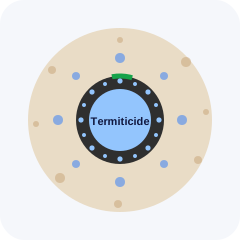
Anti-Termite Reticulation System — Long-Term, Low-Disruption Protection
The Anti-Termite Reticulation System (also known as DRS — Distributed Reticulation System) represents the most advanced and maintenance-friendly approach to long-term subterranean termite prevention available for Indian construction. Unlike conventional post-construction soil treatment which requires drilling through finished floors to inject termiticide — a messy, disruptive, and repetitive process — the reticulation system embeds the delivery infrastructure permanently in the structure at construction time, allowing future chemical replenishment through simple surface-mounted recharge ports with zero drilling and minimal disruption.
SKUAS Pest Control has extensive experience designing, installing, and maintaining anti-termite reticulation systems across Delhi NCR for residential buildings, housing societies, commercial properties, industrial facilities, and government projects. Our certified technicians work with builders, developers, and architects to integrate reticulation systems into project construction schedules at the optimal stage — delivering complete, uniform termite protection that conventional treatment methods cannot match.
Why Subterranean Termite Prevention Matters in Delhi NCR
Delhi NCR’s soil environment is particularly favorable for subterranean termite colonies. The combination of rich organic matter in urban fill soil, seasonal moisture variation, and the presence of established termite populations throughout the urban and peri-urban landscape means that virtually every new construction in the region faces ongoing termite pressure from the moment the structure is built.
Subterranean termites — primarily Coptotermes gestroi and Odontotermes obesus in Delhi NCR — live in large underground colonies and build protective mud tubes to travel from the colony to food sources (wood, cellulose materials) above ground. They enter buildings through foundation cracks, expansion joints, pipe penetrations, and gaps in slab edges. A mature Coptotermes colony can number several hundred thousand workers and cause thousands of rupees in structural damage per month — all while remaining invisible until the damage is extensive.
The key advantage of installing the reticulation system during construction is that it creates a complete, documented, uniform chemical barrier in the soil around and beneath the entire building from day one — before any termite colony can establish contact with the structure. The cost of installation during construction is a fraction of the cost of post-construction soil treatment, and the coverage is fundamentally superior.
How the Anti-Termite Reticulation System Works
The Underground Pipe Network
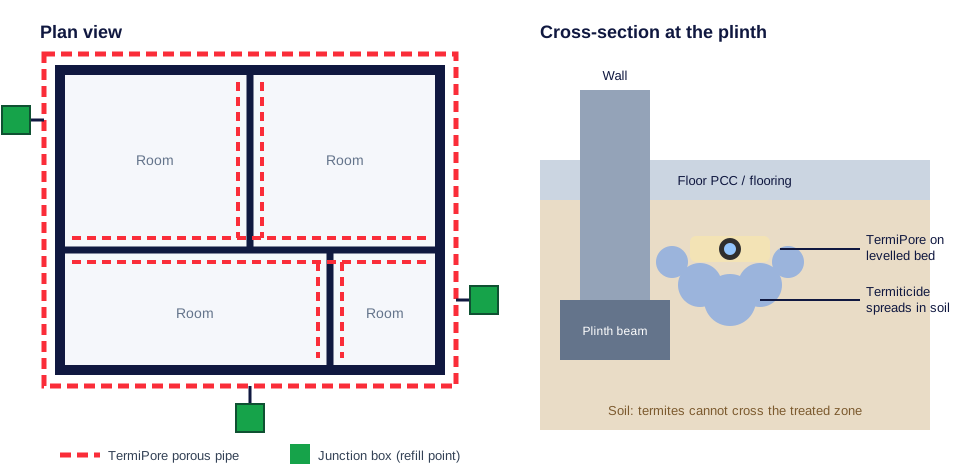
The reticulation system consists of a network of chemical-resistant high-density polyethylene (HDPE) pipes laid in a designed loop pattern around the building’s foundation perimeter, along interior foundation walls, and (in full systems) beneath the floor slab. The pipes have micro-perforations distributed along their length that allow termiticide to be distributed uniformly into the surrounding soil when injected under pressure. The pipe layout is designed by our certified technician based on the building’s structural drawings to ensure complete perimeter and sub-slab coverage with no gaps.
Recharge Ports and Surface Access Points
At designated intervals around the pipe network, surface-mounted recharge ports (also called injection ports or junction boxes) are installed at floor level or just above the finished floor surface. These compact, durable access points allow our technician to connect the injection equipment directly to the pipe network at any future replenishment service — injecting fresh termiticide under pressure to refresh the chemical barrier throughout the entire pipe system without any drilling, excavation, or significant disruption. The ports are typically inconspicuous, located at building edges, in utility rooms, or in landscaped areas where they do not affect aesthetics or usage of the property.
The Chemical Barrier Mechanism
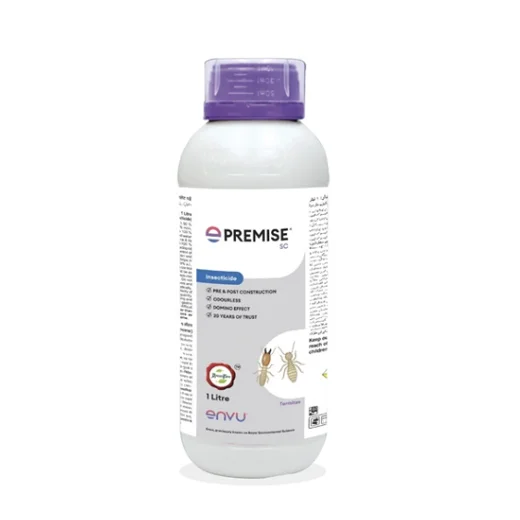
The termiticide injected through the reticulation system is a non-repellent soil barrier chemical — currently the most effective class of termiticide available. Unlike older repellent termiticides that termites could detect and avoid, non-repellent chemicals are completely undetectable to termites. Workers pass through the treated soil zone, absorb a sub-lethal dose, return to the colony, and transfer the chemical to other colony members through grooming and food sharing (trophallaxis). This transfer mechanism means that even the colony’s queen and reproductives — which never leave the nest — receive a lethal dose, causing complete colony collapse rather than just reducing forager numbers. The result is both more effective colony elimination and longer-lasting preventive protection.
Who Needs the Anti-Termite Reticulation System
Our 6-Step Installation Process
Step 1: Site Survey and Technical Design
Our certified technician conducts a detailed site survey and reviews the building’s architectural and structural drawings to design the optimal pipe network layout. The design specifies pipe routing, depth of installation, spacing between pipe runs, location and number of recharge ports, and the estimated volume of termiticide required for initial charging. The design is documented in a technical drawing that forms part of the project’s permanent service records. For large or complex projects, we work directly with the architect and structural engineer to ensure the reticulation design is compatible with the structural layout.
Step 2: Pipe Installation During Construction
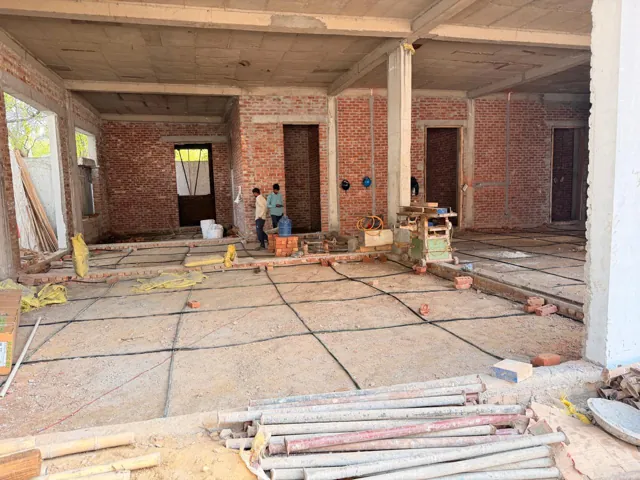
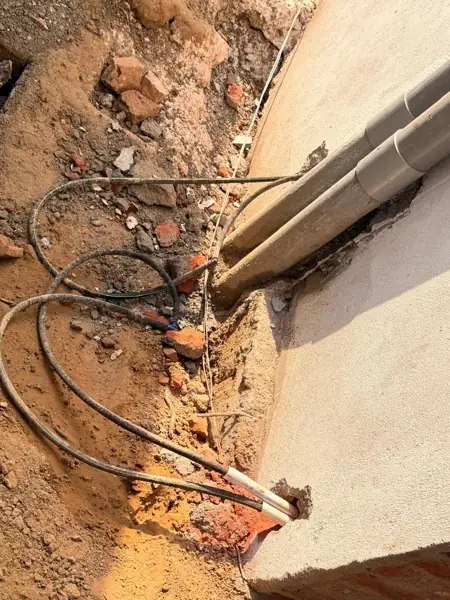
Reticulation pipes are installed during the construction phase, before the floor slab is poured. Pipes are laid in the designed pattern around the foundation perimeter and along internal foundation walls, secured at the correct depth and spacing as specified in the design. All pipe joints are tested for integrity before being covered. The installation is coordinated with the site contractor to fit within the construction schedule — typically a one to two day process depending on building size.
Step 3: Recharge Port Installation
Recharge ports are installed at all designated access points specified in the design. Each port is positioned, leveled, and secured so that its access point will be accessible at finished floor level after construction completion. Ports are protected during the remaining construction phases to prevent cement or debris ingress. Final port positions are documented on the as-built drawing.
Step 4: Pressure Testing and System Verification
Before the floor slab is poured, the complete pipe network is pressure-tested to verify integrity — all joints are leak-free, flow is consistent throughout the network, and all recharge ports are functional. Pressure test results are recorded in the installation documentation. Any issues identified during testing are corrected before slab pouring proceeds.
Step 5: Initial Chemical Charging
After construction is complete and the building is ready for termite treatment, we return to the site and inject the specified government-approved termiticide through the recharge ports under measured pressure, distributing it uniformly throughout the pipe network and into the surrounding soil. Injection volume, pressure readings, and product details are recorded for each port. This initial charging creates the complete subterranean termite barrier around and beneath the building.
Step 6: Documentation, Warranty, and AMC Registration
You receive comprehensive service documentation including the as-built pipe layout drawing, pressure test records, initial charging records (product name, concentration, volume per port), the warranty certificate, and the AMC schedule. The warranty certificate documents the protection period and conditions. AMC registration ensures you receive automated reminders for scheduled annual inspections and periodic chemical replenishments before the barrier depletes.
Reticulation System vs. Conventional Soil Treatment — Comparison
Why Choose SKUAS for Anti-Termite Reticulation in Delhi NCR
Pricing and Warranty
Installation pricing for anti-termite reticulation systems is based on building perimeter length, floor area, number of levels requiring sub-slab coverage, and pipe network complexity. Replenishment pricing depends on the total volume of termiticide required. All installations come with a 10-year warranty and a structured AMC program for scheduled replenishments.
What to Expect After Reticulation System Installation
The reticulation system works continuously and passively after installation and initial charging. Here is what ongoing ownership looks like:
- Immediate barrier establishment: The chemical barrier in the soil is established during the initial charging, typically within days of injection as the termiticide distributes through the soil around the pipes. The barrier is fully established before occupancy in most project timelines.
- Monitor for any termite activity: Despite the barrier, you should continue watching for early termite indicators — mud tubes on walls or foundation, hollow-sounding wood, or swarmer activity. Any such signs should be reported to us immediately for a barrier integrity inspection under the warranty.
- Protect the recharge ports: Do not cover or block recharge port access points with permanent fixtures, floor coverings, or landscaping that prevents access for future replenishment services. Port locations are documented in your as-built drawing for reference.
- Schedule replenishment on time: Chemical barrier strength diminishes over time as the termiticide is bound and degraded by soil microorganisms. Our AMC program ensures you receive replenishment reminders at the right interval based on your soil conditions and the termiticide used. Do not delay scheduled replenishments — a gap in barrier coverage exposes the structure to termite attack.
- Register warranty for transferability: If you sell the property, the reticulation system and its warranty can be transferred to the new owner with our documentation package — a significant value-add for any property sale in Delhi NCR.
Service Areas — Anti-Termite Reticulation System in Delhi NCR
We design and install anti-termite reticulation systems and provide chemical replenishment services across all areas of Delhi NCR including South Delhi, West Delhi, East Delhi, North Delhi, and Central Delhi, plus Gurugram, Noida, Greater Noida, Faridabad, Ghaziabad, and surrounding areas. We work with individual homeowners, private builders, housing society developers, commercial property developers, and government construction agencies. Free site assessments for new projects are available on request.