
TL;DR
Termites cause billions in property damage annually, making early detection crucial. This comprehensive guide covers all signs of termites in your home, from visible mud tubes and termite droppings to subtle indicators like hollow-sounding wood and discarded wings. Learn how to identify early signs of termite infestation in walls, furniture, and ceilings, understand the difference between drywood and subterranean termite symptoms, and discover professional inspection techniques to protect your property investment.
Table of Contents
1. Understanding Termite Infestations
2. Early Warning Signs of Termites
3. Visual Indicators of Termite Activity
4. Structural Damage Signs
5. Species-Specific Termite Signs
6. Professional Inspection Techniques
7. When to Call Pest Control
8. FAQ About Termite Detection
9. Conclusion
Every year, termites silently destroy homes worth billions of dollars, and most homeowners don't realize they have a problem until significant damage has occurred. Unlike other household pests that announce their presence, termites work quietly behind walls, under floors, and inside wooden structures, making detection challenging but absolutely critical.
At Skuas Pest Control, we've seen firsthand how early detection can save homeowners from catastrophic repair costs. The difference between catching signs of termites in your home early versus discovering them after years of infestation can mean thousands of dollars and months of restoration work. This comprehensive guide will equip you with the knowledge to identify every type of termite warning sign, understand what you're looking at, and take immediate action to protect your property investment.
Understanding the Termite Threat
Before diving into specific signs, it's essential to understand what you're dealing with. Termites are social insects that feed on cellulose found in wood, paper, and plant materials. A single colony can contain anywhere from several thousand to several million termites, all working 24/7 to consume the structural elements of your home.
The challenge with termite infestation symptoms is that these pests rarely expose themselves. They create enclosed environments where they can feed safely, protected from predators and environmental conditions. This behavior makes knowing how to detect termites in house settings absolutely crucial for homeowners.
Early Warning Signs of Termite Infestation
Termite Swarmers: The First Visible Alert
One of the most obvious early signs of termite infestation involves termite swarmers in house settings. Swarmers are winged reproductive termites that emerge from mature colonies, typically during spring months when temperature and humidity conditions align perfectly.
When you spot swarmers, you're witnessing termites looking to establish new colonies. They're attracted to light sources and often appear near windows, doors, or light fixtures. A swarm typically lasts 30-40 minutes, after which the termites shed their wings and pair off to start new colonies.
What to look for:
- Small flying insects resembling flying ants (but with straight antennae and equal-length wings)
- Discarded wings near windowsills, door frames, or spider webs
- Groups of insects emerging from walls, baseboards, or foundation cracks
- Activity occurring in early morning or late afternoon
The presence of swarmers doesn't always mean your home is currently infested, they might be coming from a nearby structure. However, finding swarmers indoors strongly suggests an active colony within your property.
Termite Droppings Identification
Termite droppings, technically called frass, serve as a telltale sign of drywood termite activity. Unlike subterranean termites that use their droppings to build mud tubes, drywood termites push their fecal pellets out of small kick-out holes in infested wood.
Termite droppings identification characteristics:
- Tiny, pellet-shaped particles resembling sawdust or coffee grounds
- Hexagonal shape when examined closely (distinctive drywood termite signature)
- Color varies from light tan to dark brown, matching the wood being consumed
- Accumulates in small piles below infested wood
- Has a powdery texture when touched
If you discover small piles of what looks like sawdust beneath wooden structures, furniture, or near walls, you're likely looking at signs of drywood termites. This differs significantly from actual sawdust, which has irregular shapes and sizes.
Visual Indicators Throughout Your Property
Termite Mud Tubes on Walls
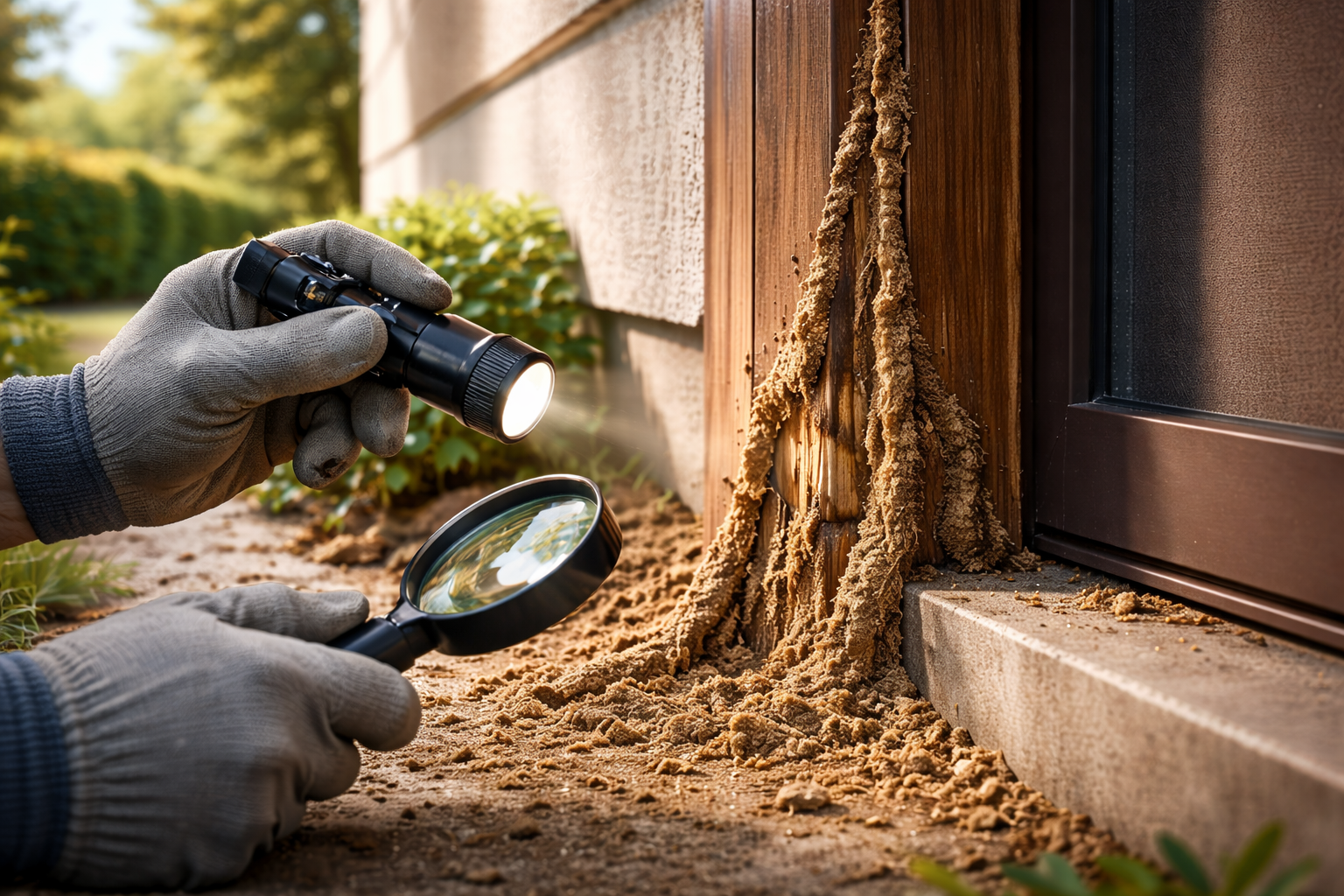
Perhaps the most recognizable signs of termites in your home are termite mud tubes on walls. Subterranean termites build these protective tunnels from soil, wood particles, and saliva to travel between their underground colonies and food sources.
Where to check for mud tubes:
- Foundation walls, both interior and exterior
- Crawl spaces and basement areas
- Behind stored items against walls
- Around plumbing penetrations
- Along concrete slabs and piers
- Inside wall voids (visible through small openings)
Mud tubes typically measure 1/4 to 1 inch wide and have a muddy, brown appearance. They can run vertically up walls or horizontally across surfaces. To test if tubes are active, break off a section and check back in a few days, active colonies will repair the damage.
We've encountered homes where mud tubes climbed three stories high, completely hidden behind vinyl siding. This demonstrates why thorough inspection of all accessible areas remains critical.
Termite Holes in Wood
Small, precise holes in wooden surfaces indicate different termite species and behaviors. Termite holes in wood come in two primary types:
Exit holes created by emerging swarmers measure approximately 1/8 inch in diameter with clean, round edges. You'll often find multiple holes in close proximity, particularly in spring.
Kick-out holes made by drywood termites are slightly smaller and serve as ejection points for frass. These holes might be barely visible but will have small piles of pellet-like droppings nearby.
When examining wood, tap it with a screwdriver handle. Termite-damaged wood sounds hollow because the interior has been consumed while the outer shell remains intact. This hollow sound is one of the most reliable how to check for termites in home techniques.
Termites in Wooden Furniture Signs
Furniture infestation presents unique challenges because items can harbor termites and spread them throughout your home. Termites in wooden furniture signs include:
- Fine powder accumulating beneath or around furniture pieces
- Small holes in wood surfaces, especially on unexposed areas
- Blistering or uneven veneer that wasn't present before
- Clicking sounds coming from inside furniture (soldiers tapping heads against wood)
- Visible maze-like patterns when veneer is removed
- Weakened joints or structural integrity issues
Antique furniture and items made from untreated wood face higher risk. We've seen family heirlooms completely destroyed because homeowners didn't recognize the warning signs until it was too late.
Recognizing Structural Termite Damage Signs
Signs of Termites in Walls
Walls can conceal extensive damage before any external indicators appear. Signs of termites in walls require careful observation:
Visual changes:
- Paint that appears bubbled or uneven without water damage
- Baseboards that separate from walls or feel soft when pressed
- Tiny pin-holes in drywall where termites have broken through
- Visible maze-like patterns on wall surfaces
- Discoloration or darkening of painted surfaces
Tactile indicators:
- Hollow sounds when tapping walls
- Soft or crumbling areas when pressing on drywall
- Sagging or uneven wall surfaces
- Walls that feel abnormally warm (large colonies generate heat)
Sound can also betray hidden infestations. In quiet environments, you might hear faint clicking, rustling, or chewing sounds from within walls, these are termites communicating or feeding.
Signs of Termites in Ceiling
Ceiling damage often goes unnoticed until it becomes severe. Signs of termites in ceiling areas include:
- Sagging or buckling ceiling sections
- Water stain-like discoloration without roof leaks
- Visible mud tubes running across ceiling surfaces (in attics or exposed areas)
- Peeling paint or bubbling texture
- Small holes or pinpoint perforations
- Accumulated frass on surfaces below ceiling areas
Attic spaces deserve special attention because they often have exposed wooden beams and rafters. During inspections, we frequently discover extensive ceiling damage that was completely invisible from interior living spaces.
General Termite Damage Signs
Beyond specific locations, overall termite damage signs manifest throughout structures:
Doors and windows:
- Difficulty opening or closing due to warped frames
- Gaps appearing around frames
- Crumbling wood around hinges or locks
- Squeaking or sticking that wasn't present before
Floors:
- Sagging or buckling sections
- Squeaking in new locations
- Tiles that loosen or pop up (from damaged subflooring)
- Visible damage to baseboards or floor trim
Overall structural issues:
- Cracks in interior walls or ceilings
- Uneven or sloping floors
- Visible wooden beams showing damage patterns
- Foundation settling or movement (in severe cases)
Species-Specific Detection Methods
How to Know if You Have Drywood Termites
Drywood termites infest dry wood and don't require soil contact. Signs of drywood termites differ significantly from subterranean species:
- Presence of frass (fecal pellets) with distinctive hexagonal shape
- Kick-out holes in wood surfaces
- Blistering on wood surfaces
- Hollow-sounding wood when tapped
- Wings shed from swarmers (usually longer wings than subterranean species)
- Damage occurring in furniture, door frames, and attic wood
Drywood termites typically create smaller colonies (few thousand compared to millions) but can still cause significant damage over time. They're particularly problematic in coastal regions and areas with low humidity.
Subterranean Termite Indicators
Subterranean termites account for the majority of termite infestation in house scenarios and create the most extensive damage:
- Mud tubes on foundations, walls, or crawl spaces
- Moisture problems in wooden structures
- Damaged wood in contact with soil
- Swarmers emerging from soil near foundations
- Shelter tubes in crawl spaces or basements
- Damage starting from ground level and moving upward
These termites require moisture and maintain contact with soil. They're more likely to infest structures with moisture problems, poor drainage, or wood-to-soil contact points.
Professional Inspection Techniques You Can Use
How to Check for Termites in Home: A Systematic Approach
Knowing how to check for termites in home settings empowers homeowners to catch problems early:
Exterior inspection:
1. Walk your home's perimeter examining foundation walls for mud tubes
2. Check areas where wood contacts soil (deck posts, stairs, fencing)
3. Inspect window and door frames for damage or swelling
4. Look for discarded wings on exterior windowsills
5. Examine mulch beds and woodpiles near the foundation
6. Check for moisture accumulation or poor drainage
Interior inspection:
1. Examine baseboards throughout your home, pressing to test firmness
2. Tap wooden surfaces listening for hollow sounds
3. Check around plumbing areas prone to moisture
4. Inspect attics and crawl spaces with a flashlight
5. Look beneath sinks, around water heaters, and near bathrooms
6. Examine furniture, especially antiques and items in storage
Tools that help:
- Flashlight for dark areas
- Screwdriver for probing suspected damage
- Moisture meter to identify problem areas
- Magnifying glass for examining frass or damage
- Camera to document findings
Conduct these inspections quarterly, paying extra attention during spring when swarmers are most active. Document your findings with photos to track changes over time.
Environmental Factors That Increase Risk
Certain conditions make termite infestation symptoms more likely:
Moisture issues:
- Leaking pipes or fixtures
- Poor ventilation in crawl spaces
- Clogged gutters causing water accumulation
- Improper grading directing water toward foundation
- High humidity in basements or attics
Structural vulnerabilities:
- Wood-to-soil contact points
- Cracks in foundation or slab
- Gaps around utility penetrations
- Untreated wood in construction
- Cellulose-based materials near ground level
Landscaping factors:
- Mulch beds against foundation
- Dense vegetation preventing air circulation
- Tree stumps or buried wood debris
- Woodpiles stored against house
- Irrigation systems creating constant moisture
Addressing these risk factors through preventive maintenance significantly reduces infestation likelihood.
When to Call Professional Pest Control
While homeowner vigilance is valuable, certain situations demand professional intervention:
Immediate professional help needed:
- Any confirmed termite activity (live termites, active mud tubes, fresh frass)
- Structural damage visible to the naked eye
- Multiple signs appearing simultaneously
- Swarmers emerging from within your home
- Previous treatments that seem ineffective
- Buying or selling a home (professional inspection required)
At Skuas Pest Control, we use advanced detection methods including:
- Thermal imaging cameras to identify colonies behind walls
- Moisture meters pinpointing conducive conditions
- Acoustic sensors detecting termite activity
- Fiber optic scopes examining wall voids
- Trained canines that can smell termites through barriers
Professional inspections provide comprehensive assessments that go far beyond surface-level examinations. We examine areas homeowners typically can't access and identify problems before they become catastrophic.
Annual inspections are recommended even without visible signs, particularly in regions with high termite activity. Prevention costs a fraction of repair expenses, and early detection can save your home's structural integrity.
FAQ: Common Questions About Detecting Termites
Q: What's the most common early sign of termites most homeowners miss?
A: Discarded wings near windows and door frames. After swarming, termites shed their wings before pairing off. These tiny, translucent wings often collect in corners or on windowsills but get dismissed as debris. If you notice wings that all look identical in size and shape, especially in spring, you're likely seeing termite swarmers that have already established nearby.
Q: Can I have termites without seeing any visible signs?
A: Absolutely. Termites can infest a structure for years before producing noticeable symptoms. They work inside walls, beneath floors, and in other concealed areas. By the time visible damage appears, significant structural harm may have occurred. This is why professional inspections are crucial, specialists have tools to detect hidden colonies that show no external signs.
Q: How do I tell the difference between termite damage and other wood damage?
A: Termite damage has distinctive characteristics. Unlike rot, which makes wood soft and spongy throughout, termite-damaged wood maintains a hard outer shell while the interior is hollowed out in maze-like patterns. Unlike carpenter ant damage, which creates smooth galleries and produces sawdust-like shavings, termite galleries appear rough and may contain mud or soil. The presence of mud tubes, frass, or live termites confirms termite activity.
Q: Are certain times of year better for detecting termites?
A: Spring offers the best detection opportunities because most termite species swarm during warm, humid conditions following rain. You're more likely to see swarmers, discarded wings, and increased activity during March through June in most regions. However, termites remain active year-round in climate-controlled structures, so vigilance shouldn't be seasonal.
Q: What should I do immediately if I find signs of termites?
A: Don't disturb the area or attempt DIY treatments that might scatter the colony. Document what you've found with photos, note the location and extent of signs, and contact a licensed pest control professional immediately. Avoid storing items against affected areas and don't make any structural repairs until after professional inspection and treatment, repairs can hide evidence inspectors need to assess the full extent of infestation.
Protecting Your Home Investment
Recognizing signs of termites in your home represents the first critical step in protecting your property from devastating damage. From obvious indicators like mud tubes and swarmers to subtle clues like hollow-sounding wood and tiny frass piles, every sign deserves immediate attention.
Termite damage doesn't happen overnight, but neither does detection require professional equipment for initial identification. By conducting regular inspections, understanding what to look for, and knowing when to call experts, you can catch infestations early when treatment is most effective and least expensive.
Remember that termites cause over five billion dollars in property damage annually in the United States alone, damage that's rarely covered by homeowner's insurance because it's considered preventable. The time you invest in learning these detection methods and inspecting your property could save you from becoming part of that statistic.
At Skuas Pest Control, we've helped thousands of homeowners identify and eliminate termite problems before they escalated into structural nightmares. Whether you've spotted concerning signs or simply want the peace of mind that comes with professional inspection, don't wait until damage becomes visible.
Schedule your comprehensive termite inspection with Skuas Pest Control today. Our certified technicians use advanced detection technology and decades of experience to find problems others miss. Protect your home, your family, and your investment, because when it comes to termites, what you don't see absolutely can hurt you.
Contact us now for a thorough property assessment and customized protection plan. Your home deserves expert care, and early detection is your best defense against these silent destroyers.