
Professional Bird Control and Pigeon Netting Services in Delhi NCR
Pigeons and other pest birds are a significant and growing problem in Delhi NCR's urban environment. Dense high-rise residential developments, commercial buildings, industrial warehouses, and even solar installations provide ideal roosting and nesting sites for pigeons, mynas, sparrows, and other urban bird species. Once birds establish a regular roosting site, their return is almost guaranteed, they are highly site-loyal and will persist through enormous deterrent effort unless physically excluded.
Bird droppings are far more than an aesthetic nuisance. Pigeon guano is corrosive (pH 3 to 4.5), damages paint, stonework, concrete, metal cladding, and solar panel surfaces. It blocks drains and gutters, creating water damage and mosquito breeding sites. It contains viable pathogens including Histoplasma capsulatum (causing histoplasmosis), Cryptococcus neoformans (causing cryptococcal meningitis), Chlamydophila psittaci (psittacosis), and Salmonella. Bird infestations in food businesses and healthcare facilities present serious health and regulatory compliance risks.
SKUAS Pest Control has been providing professional, humane bird control services across Delhi NCR since 2012. We install premium-quality physical deterrents, UV-stabilized balcony nets, stainless-steel anti-perching spikes, solar panel guards, and bird wires, that physically exclude birds from your property without harm. Every installation is preceded by a free site survey and a transparent written quote.
Health and Property Risks from Pest Birds
Understanding the full range of risks associated with bird infestations helps explain why professional bird proofing is a worthwhile investment:
- Disease transmission: Pigeon droppings harbor over 60 known human pathogens. Dried droppings become airborne as dust, which is inhaled, creating respiratory health risks particularly for building maintenance staff, children, and immunocompromised individuals.
- Property damage: Pigeon guano's high uric acid content corrodes metal, etches concrete, degrades paint and caulk, and damages stonework and marble surfaces. The cost of repainting or resurfacing bird-damaged facades often runs to lakhs of rupees, far more than the cost of early bird proofing.
- Solar panel efficiency reduction: Pigeons nesting under solar panels cause physical damage to wiring and panel frames, block airflow (reducing panel efficiency by 10 to 30%), and deposit guano on panel surfaces. Solar panel pigeon proofing typically pays for itself within 2 to 3 years through recovered panel efficiency.
- Drain and gutter blockage: Nesting material and accumulated droppings block drainage systems, causing water overflow and structural water damage, particularly serious in flat-roof commercial buildings and apartment terrace areas.
- Ectoparasites: Bird roost sites harbor bird mites, bird fleas, and other ectoparasites that readily transfer to building interiors when birds are disturbed or roost sites are abandoned, creating additional pest problems.
- Regulatory risk: Food businesses, hospitals, and pharmaceutical facilities where bird activity is detected face enforcement action from food safety, health, and quality inspection authorities. Bird control is a key requirement for FSSAI, NABH, and ISO food safety certifications.
Our Bird Control Solutions
Balcony Bird Netting
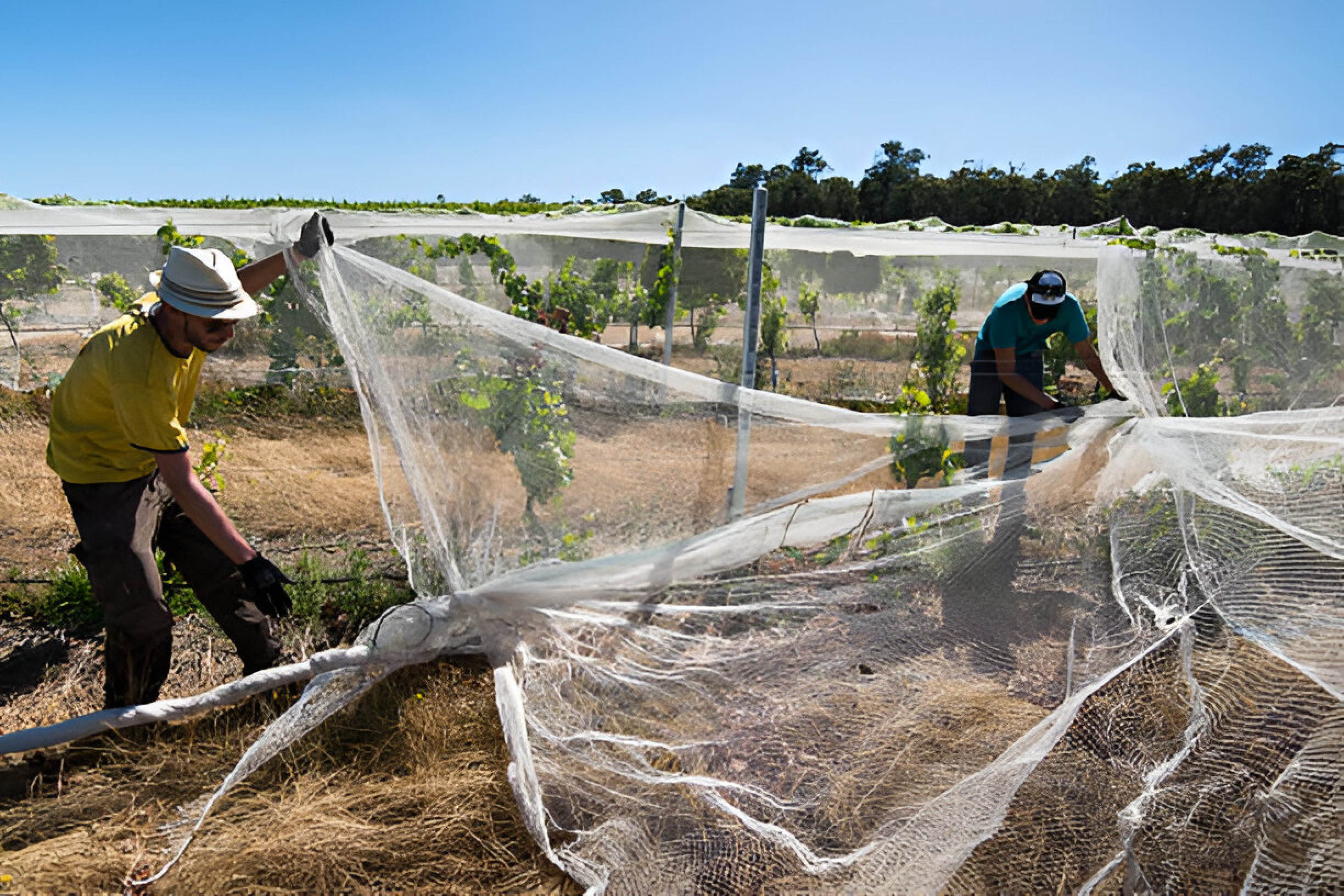
Balcony bird netting is the most effective and aesthetically acceptable solution for preventing pigeons from roosting and nesting in apartment balconies, open corridors, and building facades in Delhi NCR. We install UV-stabilized polyethylene nets with a mesh size appropriate for the target bird species (20 mm for pigeons, 50 mm for larger birds). The net is tensioned on a stainless-steel cable system with perimeter fixings that are secured to the building structure, creating a taut, professional-looking installation that is virtually invisible from a distance. Our nets are rated for 3 to 5 years of outdoor use in Delhi's climate, including the extreme heat, UV exposure, and monsoon conditions, and come with a workmanship warranty. We also install nets across larger openings including warehouse doorways, loading docks, and industrial ventilation openings.
Stainless-Steel Anti-Perching Spikes
Bird spikes are the most cost-effective solution for preventing pigeons and other birds from perching on ledges, window sills, parapet walls, signage, AC unit housings, and any horizontal surface used as a landing and roosting point. We use multi-row, 316-grade stainless-steel spike strips with a UV-stabilized base. The spike configuration (narrow, medium, or wide row) is selected based on the ledge width and the target bird species. For visual discretion, polycarbonate base spikes are available for prominent architectural features. Spike installations stay fixed in place and require minimal maintenance once properly fitted.
Solar Panel Pigeon Proofing
Pigeons nesting under solar panels is an increasingly common problem across Delhi NCR's growing rooftop solar installations. The gap between solar panels and the roof surface provides a sheltered, warm nesting environment that pigeons discover quickly. Our solar panel pigeon proofing solution uses a specifically designed galvanized mesh clip system that attaches to the panel frame without any drilling or panel modification, creating a continuous barrier around the entire panel perimeter that prevents bird access while maintaining full panel airflow. The system is compatible with all major solar panel brands and racking systems and is designed to withstand Delhi's roof conditions including extreme heat and wind loads during monsoon.
Bird Wire Systems
For architectural surfaces where spikes would be visually intrusive, ornamental ledges, heritage stonework, premium commercial building facades, stainless-steel bird wire systems provide an almost invisible deterrent. Tensioned wires are strung on spring-loaded posts at 5 to 10 cm intervals across the ledge surface, creating an unstable perching surface that discourages birds without visible hardware. Bird wire systems require professional installation to achieve the correct tension and post spacing for effective deterrence.
Guano Cleaning and Sanitization
Effective bird proofing always begins with thorough removal of all existing bird droppings, nesting material, feathers, and debris from the treatment area. Accumulated guano provides powerful attractant pheromones that call birds back to roosted sites, installing proofing over existing contamination reduces its effectiveness and leaves a health hazard in place. Our guano cleaning service uses appropriate personal protective equipment, HEPA-filtered vacuum equipment, and disinfectants with proven efficacy against bird-associated pathogens. All waste is bagged and disposed of safely. Following cleaning, we can apply a bird repellent gel or spray to treated surfaces before proofing installation to further reduce attractiveness to returning birds.
Visual and Acoustic Deterrents
For large open areas, warehouses, aircraft hangars, grain storage facilities, and large terrace gardens, where physical exclusion is impractical, we install visual deterrents (predator kites, reflective ribbons, holographic tape) and acoustic devices (distress call playback systems). These are most effective when combined with physical proofing of specific roosting hotspots and are regularly rotated to prevent habituation. Visual and acoustic deterrents are typically used as a supplementary measure alongside physical exclusion, rather than as a standalone solution.
Our Bird Control Installation Process
Step 1: Free Site Survey and Assessment
Our technician conducts a comprehensive site survey to identify all active roosting and nesting sites, assess bird species and numbers, evaluate the structural condition of installation surfaces, assess access requirements (ground-level access vs. height work), and identify any regulatory or aesthetic constraints. For high-rise installations and complex commercial properties, we conduct a detailed risk assessment before work begins and ensure all height-work safety requirements are met.
Step 2: Written Proposal with Material Specifications
Following the survey, you receive an itemized written proposal specifying exact materials (net type and mesh size, spike material and configuration, mesh clip specifications for solar proofing), installation method, areas to be covered, and the total cost. For housing societies and large commercial properties, we provide phased implementation plans if required. All materials are specified with their durability ratings and warranty periods.
Step 3: Guano Removal and Surface Preparation
Before any proofing installation, our team removes all bird droppings, nesting material, and feathers from the treatment area using appropriate safety equipment and disposal procedures. Surfaces are cleaned, disinfected, and allowed to dry. This step is mandatory, proofing installed over contaminated surfaces is both less effective and a health risk to the installers and building occupants.
Step 4: Professional Installation
Proofing materials are installed by experienced technicians following the approved installation plan. Net cable systems are tensioned to manufacturer specifications. Spikes are bonded or screwed to surfaces using appropriate fixings for the substrate (masonry, metal, concrete). Solar mesh clips are attached without drilling. All work is inspected for gaps, weak points, and secure fixings before sign-off.
Step 5: Quality Check, Documentation, and Handover
After installation, a quality inspection verifies complete coverage of all treatment areas and confirms the integrity of all fixings. We provide photographic documentation of the completed installation, material specifications and warranty information, and a maintenance guide for the installed system. Our workmanship warranty covers installation defects and fixes within the warranty period at no charge.
Why Choose SKUAS for Bird Control in Delhi NCR
Bird Control Pricing Guide
All prices are indicative. Final pricing depends on site-specific measurements, access requirements, and the exact materials specified in your survey. All installations are preceded by a free site survey and a written itemized quote.
What to Expect After Bird Control Installation
Setting realistic expectations helps you assess the performance of your bird control installation:
- Birds will attempt to return: Pigeons are highly site-loyal and will attempt to return to established roosting sites for several weeks after installation. You will see birds attempting to land on previously used surfaces and then flying away when deterred. This is expected behavior and indicates the installation is working correctly.
- Complete exclusion within 2 to 4 weeks: As birds repeatedly fail to access their established roosting sites, they gradually abandon the location and find alternative sites. Complete deterrence typically stabilizes within 2 to 4 weeks of installation.
- Check for gaps periodically: Inspect your bird net and spike installation periodically (every 3 to 6 months) for any damage from storm winds, netting sagging, or fixings becoming loose. Small gaps in netting can allow bird re-entry. Report any damage to us, installations under workmanship warranty will be repaired at no cost.
- Clean droppings promptly: Any new droppings that land on or near the installation should be cleaned promptly. Fresh droppings are much easier to remove than dried, crystallized accumulations and prevent the re-establishment of bird scent trails that attract returning birds.
Service Areas: Bird Control in Delhi NCR
We install bird netting, spikes, solar guards, and bird wire systems across all areas of Delhi NCR including South Delhi, West Delhi, East Delhi, North Delhi, and Central Delhi, plus Gurugram, Noida, Greater Noida, Faridabad, and Ghaziabad. We serve residential apartment buildings, independent houses, commercial offices, restaurants, food businesses, warehouses, hospitals, schools, government buildings, and industrial facilities. Height-access work (rope access, scaffolding) is available for high-rise commercial and industrial installations.