
By Skuas Pest Control | Delhi NCR's Trusted Pest Management Experts
TL;DR: Delhi NCR's monsoon season (July to September) turns your neighbourhood into a mosquito breeding ground almost overnight. The key to staying bite-free, and disease-free, is acting before the first rain. This guide from Skuas Pest Control walks you through practical, science-backed mosquito control tips before monsoon in Delhi NCR: from draining hidden water sources to scheduling professional treatment, so your family is protected from dengue, malaria, and chikungunya all season long.
Table of Contents
- Why Pre-Monsoon Action Matters in Delhi NCR
- How Mosquitoes Breed, Know Your Enemy
- Pre-Monsoon Mosquito Prevention Checklist for Delhi Homes
- Outdoor Mosquito Control for Delhi Gardens & Terraces
- Dengue & Malaria Prevention Tips Specific to Delhi
- Anti-Mosquito Measures Inside Your Home
- When to Call Professional Mosquito Control Services in Delhi NCR
- Monsoon Pest Control Checklist, Printable Summary
- FAQs
1. Why Pre-Monsoon Action Matters in Delhi NCR
Delhi NCR records thousands of dengue and malaria cases every year, with the bulk occurring between August and October. What most people miss is that the breeding cycle begins 2 to 3 weeks before you even notice the first mosquito swarm, right when pre-monsoon showers start in mid-June.
Hospitals like Max Healthcare and Manipal Hospitals see a predictable surge in mosquito-borne disease patients each year. Most of these cases are preventable. Acting in May to June, before the rains, is the single most effective window for mosquito control in Delhi NCR homes.
Skuas Pest Control recommends treating this window as your annual "mosquito firewall", not a reaction to a problem, but a prevention strategy.
2. How Mosquitoes Breed: Know Your Enemy
Understanding the enemy is half the battle:
- Aedes aegypti (dengue, chikungunya carrier): Breeds in clean, stagnant water, coolers, flower pots, overhead tanks, tyres.
- Anopheles (malaria carrier): Prefers stagnant, dirty water, drains, puddles, waterlogged soil.
- Culex (common house mosquito): Breeds in polluted water, clogged drains, sewage pits.
A single female mosquito can lay 100 to 300 eggs in a teaspoon of standing water. In Delhi's humid monsoon heat, eggs hatch into adults in just 7 to 10 days. This is why mosquito breeding prevention tips must focus on eliminating water sources, not just killing adult mosquitoes.
3. Pre-Monsoon Mosquito Prevention Checklist for Delhi Homes
Here is your room-by-room action plan to implement in May to June:
Terrace & Roof
- Clear all leaf debris from drains and gutters, clogged gutters hold water for weeks.
- Remove or invert any containers, buckets, or old tyres stored on the terrace.
- Check overhead water tanks for cracks and ensure lids are tightly sealed.
Kitchen & Bathrooms
- Drain and scrub All water storage vessels weekly with a brush to remove mosquito eggs attached to walls.
- Ensure no water collects under the refrigerator tray or behind the washing machine.
- Fix leaking taps, even a slow drip pools enough water for breeding.
Garden & Balcony
- Empty flower pot saucers every 3 to 4 days or fill them with sand.
- Trim overgrown plants and shrubs where adult mosquitoes rest during the day.
- If you have a birdbath or decorative pond, use Bti (Bacillus thuringiensis israelensis) tablets, a biological larvicide safe for humans and pets.
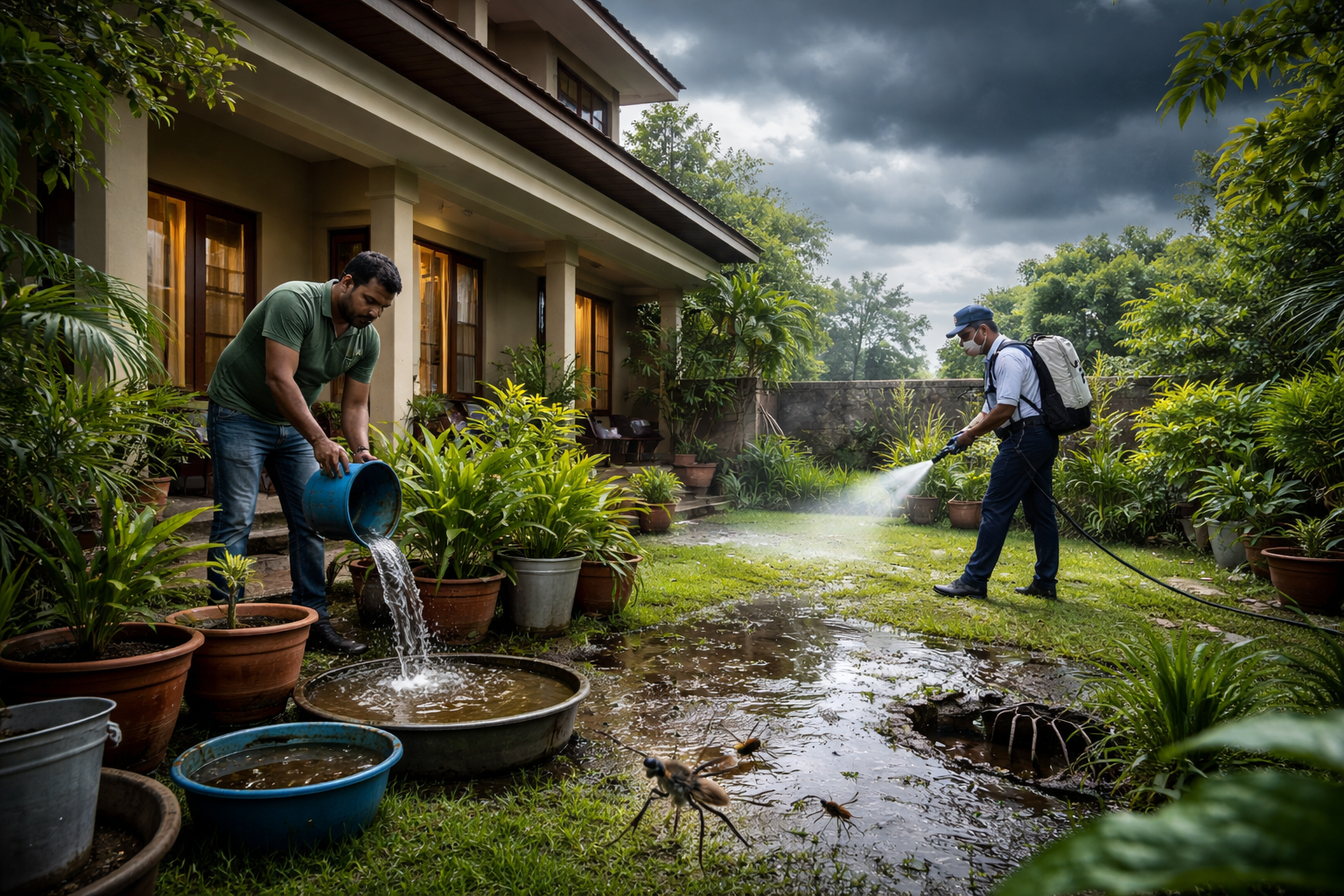
Air Coolers (Critical for Delhi NCR) Desert air coolers are Delhi's biggest hidden mosquito factory. Drain cooler water completely every week during pre-monsoon and monsoon months. Clean the tray and add a few drops of neem oil or kerosene to residual water if needed.
4. Outdoor Mosquito Control for Delhi Gardens & Terraces
Outdoor areas require a slightly different approach because you cannot seal them the same way you seal indoor spaces.
Larviciding: Apply mosquito larvicide (temephos granules or Bti tablets) to drains, water storage pits, and any area prone to waterlogging. This kills larvae before they can mature. Skuas Pest Control offers pre-monsoon larviciding services across Delhi NCR that cover these hard-to-reach spots systematically.
Fogging: A targeted residual spray on garden hedges, under furniture, and around drains creates a chemical barrier that kills adult mosquitoes on contact. For best results, fogging should be done in the early morning or evening when mosquitoes are most active.
Natural repellents for gardens: Plant mosquito-repelling plants such as citronella, tulsi (holy basil), marigold, and lemongrass around your outdoor seating areas. While they won't eliminate mosquitoes, they reduce adult resting populations naturally.
5. Dengue & Malaria Prevention Tips Specific to Delhi
Delhi NCR has distinct risk factors that generic online guides miss:
Dengue prevention tips for Delhi: The Aedes mosquito bites during daylight hours, 2 hours after sunrise and before sunset. Use repellents even during the day. Since Aedes breeds in clean water, the cooler tray and overhead tank are your biggest risks, not drains.
Malaria prevention during monsoon: The Anopheles mosquito is most active at dusk and dawn. Ensure windows and doors have intact mosquito mesh, especially in bedrooms. Sleep under permethrin-treated nets if you live near parks, drains, or construction sites in areas like Noida, Gurgaon, Faridabad, or Ghaziabad, all high-risk NCR zones.
Chikungunya: Follows the same prevention as dengue since it shares the Aedes vector. The key difference is there is no vaccine, prevention is the only protection.
Personal protection: Use DEET-based or picaridin-based repellents on exposed skin. Wear full-sleeved, light-coloured clothing when outdoors in the evenings. Keep windows closed between 6 to 8 PM when mosquito activity peaks.
6. Anti-Mosquito Measures Inside Your Home
Once you have addressed breeding sources, reinforce your home interior:
- Repair all mesh screens on windows and doors before June. A single torn mesh undoes all your outdoor effort.
- Use electric mosquito repellent devices (liquid vaporisers) in bedrooms at night. Rotate the refill brand periodically to prevent mosquito resistance.
- Seal gaps around pipes, AC vents, and under doors with weather strips or expanding foam sealant.
- Camphor and neem-based products can be used in rooms as mild natural deterrents alongside chemical repellents.
- Air conditioning keeps mosquitoes away, they are less active in cool, dry air. Ensure AC drip trays are cleaned monthly and water does not pool near the indoor unit.
7. When to Call Professional Mosquito Control Services in Delhi NCR
DIY measures work well for light infestations and prevention. But there are situations where professional intervention is the smartest and most cost-effective choice:
- Your colony, apartment complex, or villa has more than 10 to 15 units, individual-level prevention is insufficient without society-level treatment.
- You have had dengue, malaria, or chikungunya cases in your building in the past two years.
- You live near a park, nala, construction site, or any large stagnant water body, classic high-risk zones across Noida, Gurugram, and Faridabad.
- Your standard repellents and fogging are not controlling the mosquito population.
Skuas Pest Control offers a comprehensive pre-monsoon mosquito treatment plan for Delhi NCR residents and housing societies. Our trained technicians use government-approved insecticides and Integrated Pest Management (IPM) protocols, covering larviciding, residual spraying, and fogging in a single visit. We also provide a post-monsoon follow-up treatment to break the second breeding cycle that typically peaks in October.
Contact Skuas Pest Control for a free site assessment and a customised monsoon mosquito protection plan before the rains begin.
8. Monsoon Pest Control Checklist: Quick Summary
| Task | When | DIY or Pro |
|---|---|---|
| Drain & clean air cooler trays | Weekly (June to Oct) | DIY |
| Clear roof drains and gutters | May to June | DIY |
| Apply larvicide to drains & tanks | Before first rain | DIY / Pro |
| Repair window and door mesh | May | DIY |
| Pre-monsoon residual spray (indoors) | June | Pro recommended |
| Society-level fogging | June & September | Pro |
| Overhead tank inspection & seal | May | DIY / Pro |
| Post-monsoon follow-up treatment | October | Pro |
FAQs
Q1. When is the best time to do mosquito treatment before monsoon in Delhi NCR?
The ideal window is mid-May to mid-June, before the pre-monsoon showers begin. Treating at this stage eliminates overwintering adult populations and prevents the first breeding cycle of the season.
Q2. Does fogging kill mosquito larvae?
No, fogging kills adult mosquitoes only. For complete mosquito control, fogging must be combined with larviciding (treating water bodies where larvae live). Skuas Pest Control includes both in its pre-monsoon treatment packages.
Q3. Are professional mosquito control chemicals safe for children and pets?
Yes, when applied by trained professionals using WHO-approved compounds at correct dosages. Skuas Pest Control follows all safety protocols and advises a 2 to 3 hour vacating period after indoor spray application as a precaution.
Q4. How often should a housing society get mosquito treatment during monsoon?
At minimum, three treatments are recommended: one pre-monsoon (June), one mid-monsoon (August), and one post-monsoon (October). High-risk zones near drains or parks may need monthly visits.
Q5. Can mosquitoes breed in just a bottle cap of water?
Yes. The Aedes aegypti mosquito needs as little as 5 to 10 ml of stagnant water to lay eggs. This is why inspecting every small container, from flower pot saucers to discarded cups, is essential for dengue prevention in Delhi.
Q6. What makes Delhi NCR particularly high risk for mosquito-borne diseases?
Delhi NCR's combination of extreme summer heat, sudden monsoon rains, dense construction activity, and inconsistent drainage infrastructure creates ideal breeding conditions. Localities like Dwarka, Rohini, Noida Sectors 62 to 78, Gurugram's Sohna Road belt, and Faridabad's industrial zones consistently report high seasonal caseloads.
For professional mosquito control services in Delhi NCR, contact Skuas Pest Control, your local expert in pre-monsoon pest protection. Protect your family before the rains strike, not after.