
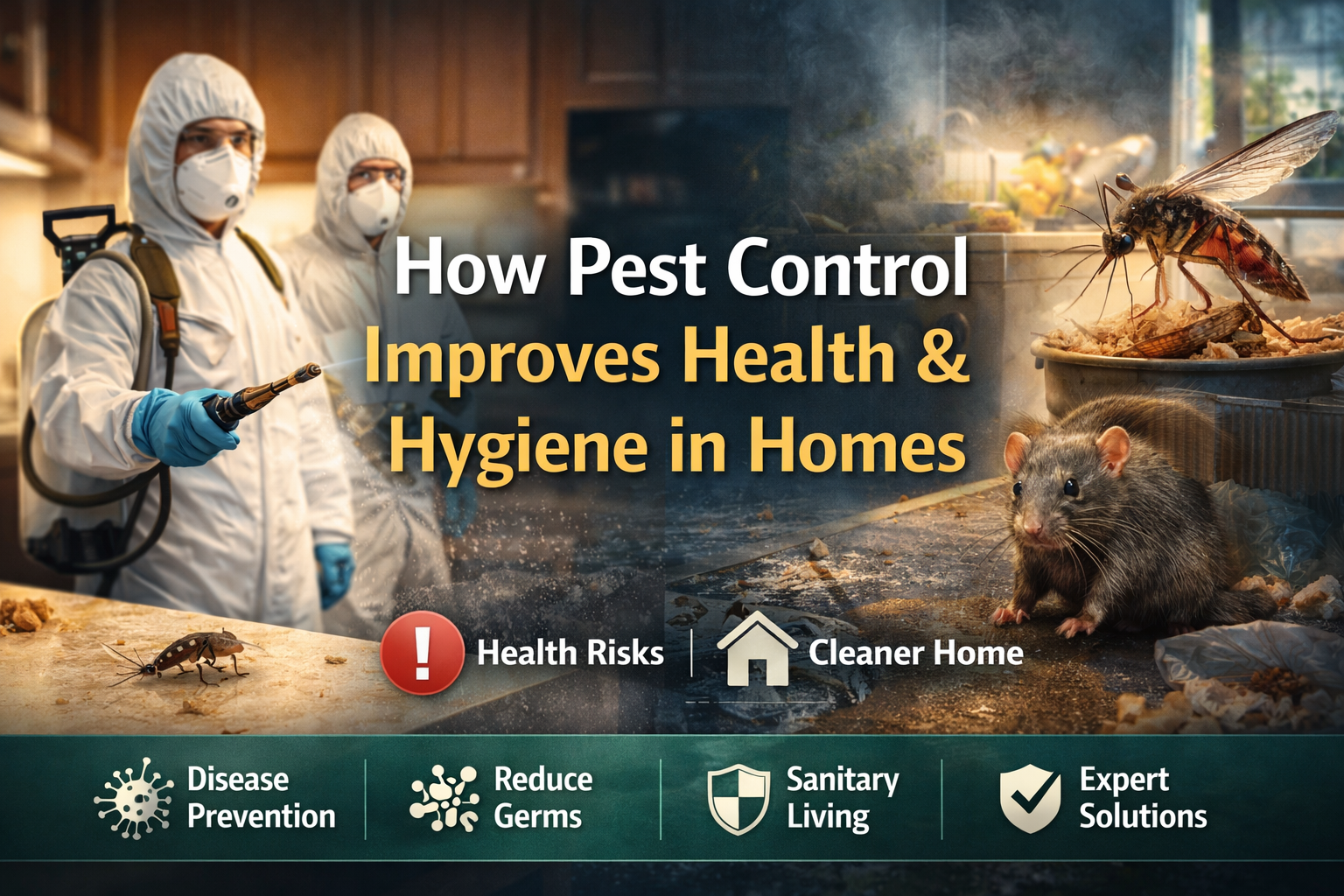
TLDR (Too Long; Didn't Read): Pests like cockroaches, rodents, mosquitoes, and bed bugs are not just household nuisances, they are serious health hazards. Professional pest control for home hygiene eliminates disease-carrying pests, reduces allergens, prevents food contamination, and creates a genuinely safe living environment. Skuas Pest Control provides certified, eco-friendly residential pest control services that protect your family's health all year round.
Table of Contents
- Introduction, Why Pest Control Is a Health Priority
- The Hidden Health Risks of Common Household Pests
- How Pest Control Directly Improves Home Hygiene
- Key Health Benefits of Professional Pest Control Services
- DIY vs. Professional Pest Control, Which Is Better for Your Health?
- When Should You Call a Professional?
- How Skuas Pest Control Keeps Your Home Safe & Hygienic
- FAQs
- Final Thoughts
Introduction: Why Pest Control Is a Health Priority
Most homeowners think about pest control only when they spot a cockroach in the kitchen or notice termite damage on wooden furniture. But by the time pests become visible, the damage to your home's hygiene and your family's health may already be underway.
Pest control for home hygiene is not just about eliminating creepy crawlies, it is one of the most important steps you can take to protect your family from preventable diseases, reduce allergen exposure, and maintain a genuinely clean living environment. In densely populated urban areas across India, where warm climates and high humidity create ideal breeding conditions for pests, the need for regular, professional pest management has never been greater.
This guide explores exactly how pest control improves health and hygiene in homes, what risks untreated infestations pose, and why professional residential pest control services are worth every rupee.
The Hidden Health Risks of Common Household Pests
Before understanding the benefits of pest control, it helps to understand what pests are silently doing to your family's health every day.
Cockroaches are among the most dangerous household pests from a hygiene perspective. They travel through sewers, drains, and garbage before walking across your kitchen counters and food surfaces, transferring harmful bacteria including Salmonella, E. coli, and Staphylococcus. Their shed skin, droppings, and saliva are also potent allergens that trigger asthma attacks and allergic reactions, particularly in children.
Rodents (rats and mice) contaminate food and surfaces with their droppings, urine, and hair, spreading dangerous diseases like leptospirosis, hantavirus, rat-bite fever, and salmonellosis. A single rat produces up to 25,000 droppings per year, an alarming hygiene risk for any household.
Mosquitoes are responsible for dengue fever, malaria, chikungunya, and Zika virus, diseases that claim thousands of lives across India every year. Their breeding sites around homes create ongoing exposure risks for every family member, especially children and the elderly.
Bed bugs, while not direct disease transmitters, cause significant sleep deprivation, skin infections from scratching bites, and psychological stress. Their presence is also a strong indicator of compromised home hygiene.
Termites, though not a direct health threat, compromise the structural integrity of your home, creating damp, deteriorating areas that encourage mold growth, a serious respiratory health hazard.
How Pest Control Directly Improves Home Hygiene
Effective pest control for home hygiene works on multiple levels simultaneously, creating a cleaner, safer environment beyond just pest elimination.
Eliminating Contamination Sources: Professional pest control removes pests that contaminate food, water, and surfaces with bacteria, pathogens, and allergens. Once cockroaches, rodents, and other disease vectors are eliminated, your kitchen and living areas become genuinely hygienic spaces.
Reducing Allergen Levels: Cockroach droppings, rodent dander, and pest shed skins are among the most common indoor allergens. Regular pest control services significantly reduce these allergen concentrations in your home, providing measurable relief for asthma and allergy sufferers.
Preventing Food Contamination: Pests are responsible for significant food spoilage and contamination in households. Eliminating rodents and insects from kitchens, pantries, and food storage areas directly protects the food your family consumes every day.
Stopping Disease Transmission Cycles: By eliminating mosquito breeding grounds and adult mosquito populations, professional pest control breaks the disease transmission cycle for dengue, malaria, and chikungunya at the household level.
Improving Indoor Air Quality: Pest droppings, decomposing pest bodies, and mold growth associated with termite damage all negatively impact indoor air quality. Comprehensive pest management addresses these sources and contributes to cleaner, healthier indoor air.
Key Health Benefits of Professional Pest Control Services
Here is a clear summary of the direct health benefits that professional residential pest control services deliver:
| Health Benefit | Pests Addressed |
|---|---|
| Prevention of dengue & malaria | Mosquitoes |
| Reduced asthma & allergy triggers | Cockroaches, dust mites |
| Elimination of food contamination | Rodents, cockroaches, ants |
| Prevention of leptospirosis & hantavirus | Rodents |
| Better sleep quality | Bed bugs |
| Improved indoor air quality | Termites, cockroaches |
| Reduced risk of skin infections | Bed bugs, fleas |
| Protection of children & elderly | All pests |
Professional pest control for a clean home delivers these benefits systematically and consistently, unlike DIY methods that address only surface symptoms.
DIY vs. Professional Pest Control: Which Is Better for Your Health?
Many homeowners attempt to manage pest problems using store-bought sprays, repellents, and home remedies. While these measures can provide temporary relief, they rarely achieve the complete elimination needed for genuine health protection.
DIY pest control products often contain harsh chemicals that, when used incorrectly, can pose health risks to your family, particularly children, elderly residents, and pets. They also fail to address pest colonies at their source, meaning infestations return repeatedly.
Professional pest control services from certified companies use WHO-approved, eco-friendly treatments that are applied correctly and safely by trained technicians. The result is complete pest elimination, not just temporary suppression, along with preventive measures that stop infestations from returning. For true pest control for home hygiene, professional intervention is always the more effective and ultimately safer choice.
When Should You Call a Professional?
You should consider calling professional pest control services when:
- You spot cockroaches, rodents, or bed bugs during daylight hours (a sign of heavy infestation)
- A family member develops unexplained allergies, rashes, or respiratory issues
- You notice gnaw marks on food packaging, furniture, or electrical wiring
- You find termite mud tubes, hollow-sounding wood, or discarded wings
- Mosquito bites continue despite using repellents and mosquito nets
- You have young children, elderly family members, or immunocompromised individuals at home
In each of these situations, professional residential pest control services are not just recommended, they are essential for protecting your family's health.
How Skuas Pest Control Keeps Your Home Safe & Hygienic
Skuas Pest Control is a trusted provider of comprehensive pest control services for homes across Delhi NCR and Chandigarh. What sets Skuas Pest Control apart is a commitment to genuine, health-focused pest management that prioritizes your family's safety at every step.
Every service begins with a thorough property inspection to identify pest species, infestation severity, entry points, and breeding sites. This detailed assessment allows Skuas Pest Control's certified technicians to design a customized treatment plan that delivers targeted, effective results, not just temporary relief.
Skuas Pest Control uses only WHO-approved, eco-friendly chemicals and advanced treatment technologies including gel bait systems, ULV fogging, heat treatment, and anti-termite reticulation systems. All treatments are safe when applied as directed for children, pets, and the elderly when applied by trained professionals. Services include cockroach control, bed bug treatment, mosquito control, rodent management, termite treatment, bird control, and professional disinfection, a complete home hygiene solution under one roof.
Every treatment by Skuas Pest Control comes with detailed service documentation, preventive recommendations, and a warranty with free follow-up visits. Annual pest control maintenance contracts ensure year-round protection for your home, keeping your family safe through every season.
Frequently Asked Questions (FAQs)
Q1. How often should I get pest control done for my home? For most homes, a professional pest control treatment every 3 to 6 months is recommended. Homes in high-risk areas or with previous severe infestations may benefit from more frequent visits or an annual maintenance contract.
Q2. Is professional pest control safe for children and pets? Yes. Reputable pest control companies like Skuas Pest Control use WHO-approved, eco-friendly chemicals that are safe for children and pets when applied correctly by trained technicians. You may be asked to keep children and pets away from treated areas for a short period after application.
Q3. Can pest control really improve my family's health? Absolutely. By eliminating disease-carrying pests like mosquitoes, cockroaches, and rodents, professional pest control directly reduces your family's exposure to bacteria, viruses, allergens, and parasites that cause serious illnesses.
Q4. How long does a professional pest control treatment last? Treatment effectiveness varies by pest type and treatment method. Most professional treatments provide protection for 3 to 6 months, with some treatments like anti-termite reticulation systems offering protection for several years with annual maintenance.
Q5. What is the difference between pest control and disinfection? Pest control eliminates insects, rodents, and other pests from your property. Disinfection services use hospital-grade disinfectants to eliminate bacteria, viruses, and fungi from surfaces. Both are important components of complete home hygiene, many professional companies like Skuas Pest Control offer both services.
Q6. Why is DIY pest control not enough for serious infestations? DIY products treat surface symptoms without addressing pest colonies at their source. Pests like cockroaches, bed bugs, and termites hide in inaccessible areas that consumer products cannot reach effectively. Professional pest control uses specialized equipment, advanced formulations, and systematic techniques that deliver complete, lasting elimination.
Final Thoughts
Your home should be your family's safest place, and maintaining that safety requires more than regular cleaning. Pest control for home hygiene is a fundamental health investment that protects your family from diseases, allergens, food contamination, and structural damage caused by pests.
Whether you are dealing with an active infestation or want to take a proactive approach to keeping your home pest-free, professional residential pest control services are the most effective and reliable solution available. The home pest control benefits extend far beyond pest elimination, they translate directly into better health, cleaner living spaces, and greater peace of mind for every member of your family.
Ready to protect your home and family? Contact Skuas Pest Control today for a free inspection and take the first step toward a healthier, truly hygienic home!
Disclaimer: Results may vary based on infestation severity. Skuas Pest Control uses approved chemicals ensuring safety. Professional inspection recommended before treatment.