Quick Answer
Anti-termite reticulation is a long-term solution that creates a chemical barrier around a building's foundation using a network of underground pipes. As recommended by government bodies like the Central Public Works Department (CPWD), this method is highly effective for large structures like housing societies. For RWAs in 2026, the key takeaways are:
- Plan for professional installation during construction or major landscaping for maximum effectiveness.
- Commit to a long-term Annual Maintenance Contract (AMC) for periodic recharging.
- Educate residents on reducing moisture around the foundation to support the system's efficacy.
For any housing society in Delhi NCR, the structural integrity of its buildings is paramount. Termites, often called 'silent destroyers', pose a significant threat, quietly eating away at foundations, wooden fixtures, and more. Given the dense construction and humid monsoon season in our region, the risk is even higher. This guide is designed specifically for Resident Welfare Associations (RWAs) to understand one of the most effective, long-term solutions available in 2026: the anti-termite reticulation system. We'll walk you through what it is, how to implement it, and how to choose the right partner for the job.
Of major urban pests, termites cause the most significant structural damage worldwide.
Top Threat
Source: World Health Organization
What is an Anti-Termite Reticulation System?
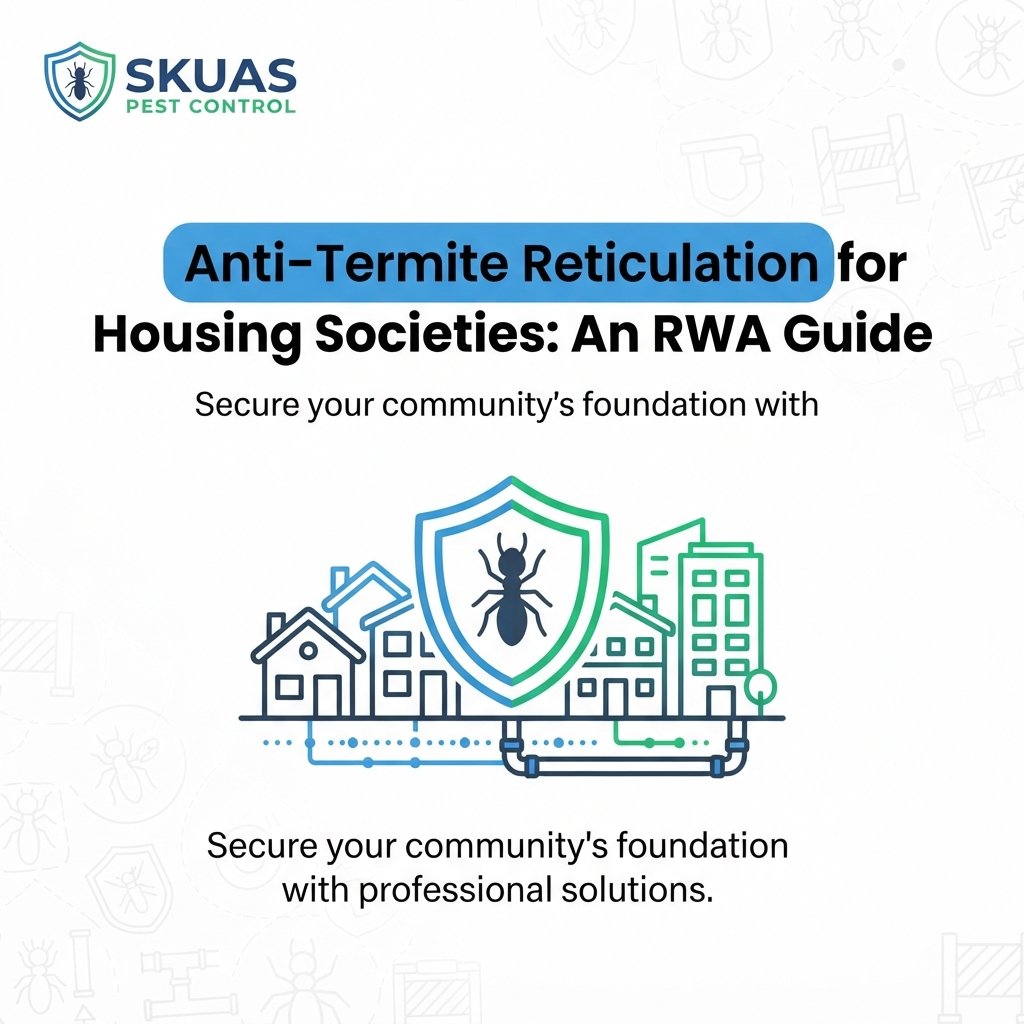
An anti-termite reticulation system is essentially a network of specially designed underground pipes that are installed around a building's foundation. These pipes have emitters (or 'pores') at regular intervals that allow for the controlled and uniform distribution of liquid anti-termite chemicals into the soil. This creates a continuous chemical barrier around and under the building, preventing termites from entering from the outside. Unlike a one-time soil treatment, this system is refillable via junction boxes, making it a sustainable and potent solution for the entire life of the building.
While a reticulation system is a powerful preventative measure, addressing active infestations requires a different approach. For immediate concerns, it's best to consult experts in termite control services to assess the situation.
5-Step Process for Implementing a Reticulation System
For an RWA, overseeing the implementation requires a structured approach. Following these steps ensures a successful and long-lasting installation.
- Professional Site Assessment & Planning: The vendor should conduct a thorough survey of the society's layout, including all building footprints, common areas, and gardens. They will then design a custom piping plan to ensure complete coverage.
- Installation of the Piping Network: This is best done during construction (pre-construction). For existing societies, trenches are dug around the foundation to lay the pipes. The process is planned to cause minimal disruption to residents.
- Initial Charging of the System: Once the network is laid, it is filled or 'charged' with a CIB-approved, non-repellent termiticide. The chemical is pumped under controlled pressure to ensure uniform distribution in the soil.
- System Sealing & Junction Box Installation: The trenches are refilled, and intelligently placed junction boxes are installed on the surface. These boxes are the access points for future recharging.
- Regular Maintenance & Recharging: The system should be checked annually. Depending on the chemical used and soil conditions, it needs to be recharged every 2-4 years to maintain the strength of the chemical barrier.
Common Mistakes RWAs Make (and How to Avoid Them)
Investing in a reticulation system is a major decision. Avoiding these common pitfalls can save money and prevent future disasters.
- Choosing a Non-Certified Vendor: The biggest mistake is hiring a company without proper licensing or experience. This can lead to faulty installation, use of banned chemicals, and no long-term support.
- Skipping Annual Maintenance: Some RWAs try to save costs by skipping the Annual Maintenance Contract (AMC). The chemical barrier degrades over time, and without periodic inspection and recharging, the system becomes useless.
- Ignoring Moisture Issues: A reticulation system is not a magic bullet. If the society has persistent water leakage, poor drainage, or gardens with wood mulch piled against walls, these conditions will attract termites and put extra stress on the chemical barrier.
Real-World Scenario: A Group Housing Society in Gurgaon
A 10-tower society in Sector 56, Gurgaon, faced recurring termite issues in its ground-floor flats and clubhouse, causing wooden door frames to crumble. After multiple failed chemical spray treatments, the RWA invested in a post-construction anti-termite reticulation system. The installation took two weeks with minimal disruption. For the past three years, their annual AMC involves a simple, quick recharge of the system, and they have reported zero termite incidents, protecting their property's value.
RWA Checklist for Selecting a Vendor in 2026
Before finalizing a pest control partner, the RWA committee should verify the following:
- Government Licensing: Ensure the company is licensed by the Directorate of Plant Protection, Quarantine & Storage.
- CIB-Approved Chemicals: Ask for the names and material safety data sheets (MSDS) of the termiticides they use. They must be approved by the Central Insecticides Board & Registration Committee.
- Compliance with Standards: The vendor must follow the anti-termite treatment specifications laid out by the Central Public Works Department (CPWD).
- Experience with Large Projects: Ask for references from other housing societies in Delhi NCR of a similar scale.
- Clear AMC and Warranty Terms: The contract should clearly state the frequency of inspections, recharging costs, and the warranty period.
Frequently Asked Questions for RWAs
1. How long does the anti-termite reticulation system last?
The physical piping system is designed to last for the lifetime of the building (over 40-50 years). The chemical inside it needs to be recharged every few years to remain effective.
2. Is the chemical used safe for children and pets?
Yes, professional companies use CIB-approved chemicals that are safe when installed correctly. The liquid is sealed underground and only handled by trained technicians during recharging, minimizing any exposure risk to residents.
3. Can this system be installed in an existing, fully-constructed society?
Absolutely. While pre-construction installation is ideal, 'post-construction reticulation' is very common. It involves digging narrow trenches around the building peripheries to lay the pipes, a process that is done with minimal disruption.
4. What is the approximate cost for a housing society?
The cost depends on the total perimeter of the buildings that need protection (the 'running feet'). A professional vendor will provide a detailed quote after a site survey. It is a significant investment, but far less than the cost of major structural repairs from termite damage.
5. How often does the system need to be recharged?
This typically ranges from 2 to 4 years. The frequency depends on the specific termiticide used, soil conditions, and the level of termite pressure in the area. Your AMC will define the recommended schedule.
Protect Your Home & Family from Harmful Pests
SKUAS Pest Control provides expert, safe, and reliable pest management solutions for homes and businesses.
Book a Pest Inspection Today