
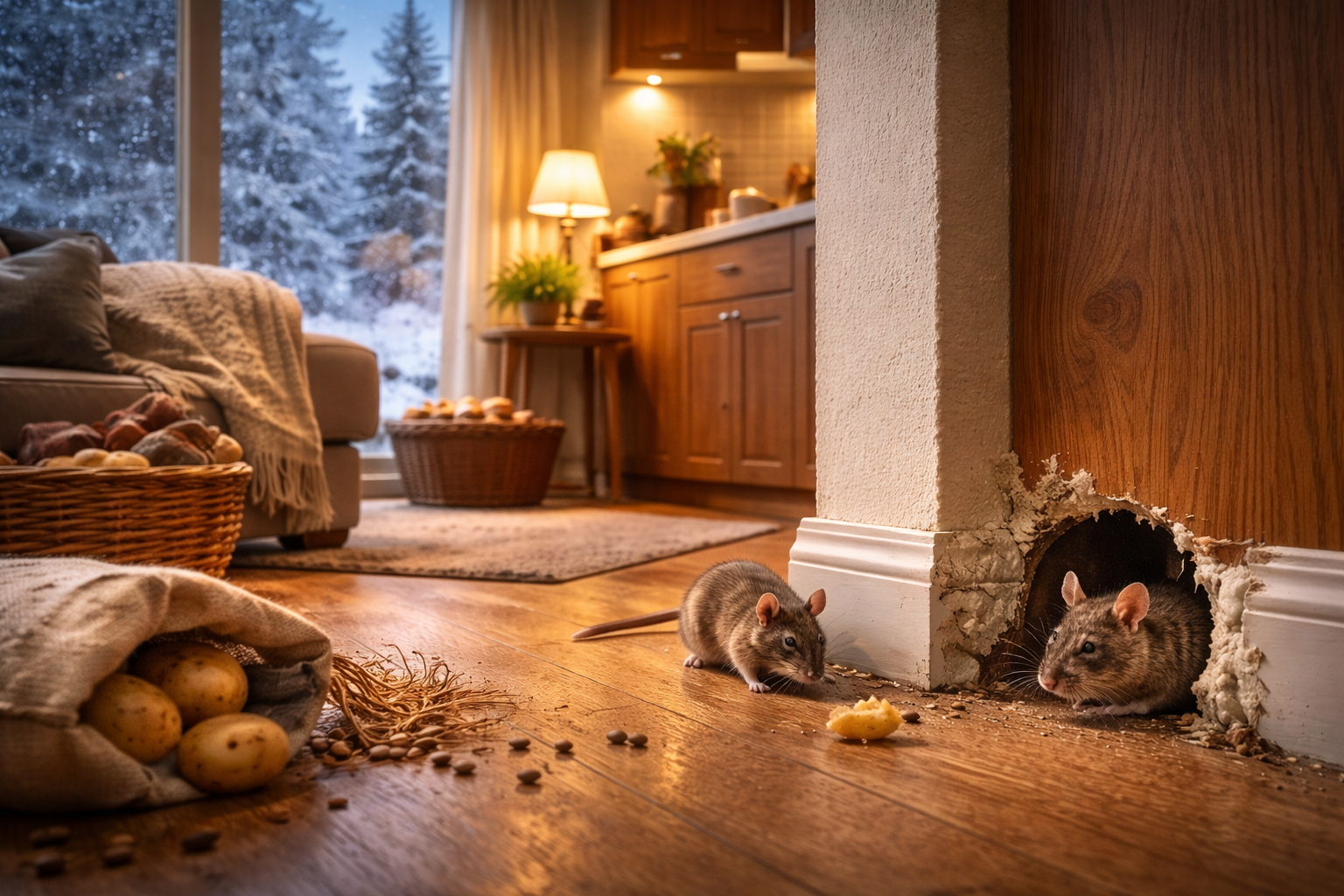
As temperatures plummet and snow begins to blanket the ground, you're not the only one seeking warmth and comfort indoors. Rodents like mice and rats are also looking for a cozy place to ride out the cold months, and unfortunately, your home might be their ideal winter retreat. If you've noticed scratching sounds in your walls or discovered droppings in your pantry as winter approaches, you're experiencing a rodent infestation in winter—a problem that affects millions of homeowners every year.
At Skuas Pest Control, we've seen firsthand how winter transforms a minor rodent presence into a full-blown infestation. The cold months bring a perfect storm of conditions that drive these persistent pests directly into our living spaces. Understanding why this happens and what you can do about it is the first step toward protecting your home, family, and property from these destructive invaders.
Table of Contents
1. Why Rodent Infestations Spike During Winter Months
2. Understanding Winter Rodent Behavior Patterns
3. Common Entry Points Rodents Use in Cold Weather
4. Signs of a Winter Rodent Infestation in Your Home
5. Health Risks Associated with Winter Rodent Activity
6. Professional Prevention Strategies for Winter Pest Control
7. DIY Methods to Keep Rodents Out This Winter
8. When to Call Professional Pest Control Services
9. Frequently Asked Questions
10. Conclusion
Why Rodent Infestations Spike During Winter Months
Why rodents increase in winter isn't just about seeking warmth—it's a complex survival strategy driven by multiple environmental factors. When outdoor temperatures consistently drop below 50°F, rodents face a life-threatening situation that forces them to adapt quickly or perish.
The primary driver is thermoregulation. Mice and rats are warm-blooded mammals that struggle to maintain body temperature in freezing conditions. Unlike larger animals with substantial fat reserves, rodents have a high surface-area-to-volume ratio, meaning they lose body heat rapidly. A single mouse can lose fatal amounts of body heat in just a few hours when exposed to subfreezing temperatures without shelter.
Food scarcity compounds this problem. During warmer months, rodents enjoy abundant food sources—seeds, nuts, insects, vegetation, and human refuse easily accessible outdoors. Winter eliminates most of these options. Snow covers ground-level food sources, insects disappear, and vegetation dies back. [Link: common rodent food sources] This scarcity makes your pantry, pet food storage, and even crumbs behind appliances irresistibly attractive.
Breeding season also plays a surprising role. Many people assume rodents hibernate or become dormant in winter, but this is a dangerous misconception. Rats and mice remain active year-round, and females can reproduce throughout winter if they find adequate shelter and food. A single female mouse can produce 5-10 litters per year with 5-6 pups each, meaning a small winter intrusion can quickly escalate into a major infestation.
The Perfect Storm: Environmental Conditions
Winter creates what pest control professionals call "pressure events"—environmental conditions that force rodents to take risks they normally avoid. These include:
Temperature drops below 32°F: Immediate survival threatUnderstanding Winter Rodent Behavior Patterns
Observing rodent behavior during winter reveals fascinating survival adaptations. Why mice enter homes in winter and why rats come inside in winter follows predictable patterns that homeowners can anticipate.
Rodents begin their winter preparations in late fall, typically September through November depending on your region. During this "pre-winter" phase, they scout potential shelter sites, including your home. They're looking for three essential survival elements: warmth, food, and water.
Nocturnal activity intensifies during winter months. With limited daytime warmth and increased predation risk, rodents concentrate their activities during nighttime hours when homes are quieter. This is why you might hear scratching or scurrying sounds primarily between 10 PM and 4 AM—peak rodent activity hours.
Interestingly, winter rodent infestations often go undetected initially because rodents modify their behavior to avoid human contact. They establish routines that coincide with your absence or sleep schedule, traveling along walls and behind appliances where they're less likely to be spotted.
Territory and Social Structure
Mice typically establish territories of 10-30 feet from their nest, while rats may forage up to 100 feet away. During winter, these territories shrink as rodents minimize energy expenditure. If you have rodents in your basement, they're likely nesting nearby rather than traveling from outside each night.
Social dynamics also change. Mice are generally social and may live in colonies, while rats establish hierarchies. Winter crowding can lead to increased aggression and territorial marking through urine, which creates that distinctive musky odor often associated with infestations.
Common Entry Points Rodents Use in Cold Weather
One of the most shocking facts about rodents entering homes in cold weather is the tiny spaces they can squeeze through. Mice can fit through openings as small as a dime (about 1/4 inch), while rats only need a space the size of a quarter (1/2 inch). Their skeletal structure is incredibly flexible, with compressible skulls that allow them to navigate impossibly small gaps.
Primary winter entry points include:
Foundation cracks and gaps: Temperature fluctuations cause concrete to expand and contract, creating new cracks each winterSeasonal Structural Changes
Winter weather creates new vulnerabilities even in well-maintained homes. Frost heave can shift foundations, creating new cracks. Snow accumulation against the house provides rodents with easy access to higher entry points. Ice dams and water damage can deteriorate building materials, creating soft spots that rodents easily chew through.
During our inspections at Skuas Pest Control, we've found rodents entering through displaced ridge vents after heavy snow, through separation gaps where additions meet original structures, and even through damaged chimney caps—entry points that didn't exist or weren't problematic during summer months.
Signs of a Winter Rodent Infestation in Your Home
Early detection is crucial for preventing a minor rodent presence from becoming a major infestation. Signs of rodent infestation in house environments become more apparent during winter when rodents spend more time indoors and concentrate their activities in smaller areas.
Visual evidence includes:
1. Droppings: Fresh droppings are dark and moist, appearing similar to dark grains of rice (mice) or olive pits (rats). You'll typically find them along walls, in cabinets, under sinks, and near food sources. A single mouse produces 50-75 droppings daily.
2. Gnaw marks: Rodents must constantly gnaw to wear down their continuously growing incisors. Fresh gnaw marks appear lighter in color on wood and show parallel grooves from their two front teeth. Common targets include structural wood, electrical wiring, plastic containers, and cardboard boxes.
3. Grease marks: Rodents travel the same pathways repeatedly, leaving dark, oily rub marks along walls, pipes, and beams from the natural oils in their fur.
4. Nesting materials: Shredded paper, fabric, insulation, and plant matter gathered in hidden spots indicate active nesting. [Link: rodent nesting habits]
5. Footprints and tail marks: In dusty areas like attics or basements, you might see tiny footprints (mice have 4-toed front feet and 5-toed back feet) and tail drag marks.
Auditory and olfactory signs:
Scratching or scurrying sounds: Most noticeable at night in walls, ceilings, or atticsThe One Week Rule
Professional pest controllers use the "one week rule" for assessment. If you discover fresh droppings and check the same location one week later to find more droppings, you have an active infestation requiring immediate attention. This simple test confirms that rodents are currently using that space rather than just passing through.
Health Risks Associated with Winter Rodent Activity
The health implications of a mouse infestation in winter or rat infestation in winter extend far beyond the unpleasant factor. Rodents are vectors for numerous diseases and create environmental hazards that threaten your family's wellbeing.
Direct disease transmission includes:
Hantavirus Pulmonary Syndrome: Transmitted through inhalation of dust contaminated with rodent urine or droppings, potentially fatal.Indirect health hazards:
Rodents also carry parasites including fleas, ticks, and mites that can infest homes and transmit their own diseases like Lyme disease and plague. Winter concentrations of rodents in confined spaces increase parasite populations and transmission risks.
Allergies and asthma complications represent another serious concern. Rodent dander, urine proteins, and dried feces become airborne, triggering respiratory issues particularly in children and sensitive individuals. Studies show that rodent allergen exposure is a significant factor in urban asthma cases [Source: National Institute of Environmental Health Sciences].
Property Damage and Fire Risks
Beyond health concerns, winter rodent activity causes substantial property damage. Rodents gnaw through electrical wiring, creating fire hazards—an estimated 20-25% of house fires of unknown origin are attributed to rodent damage. They contaminate insulation with urine and feces, reducing its effectiveness and creating expensive remediation needs. Structural damage from gnawing on support beams, drywall, and foundation materials can compromise your home's integrity.
Professional Prevention Strategies for Winter Pest Control
Winter pest control for rodents requires a comprehensive, proactive approach. At Skuas Pest Control, we implement integrated pest management (IPM) strategies that address the root causes rather than just treating symptoms.
Exclusion: The Foundation of Prevention
Professional-grade exclusion is the most effective long-term solution. This involves:
Comprehensive property inspection: Identifying all current and potential entry points, including those only accessible to trained professionalsEnvironmental Modification
Reducing the attractiveness of your property to rodents involves:
Removing outdoor food sources by securing trash bins, eliminating bird feeders during winter, and clearing fallen fruitReducing harborage by trimming vegetation away from the house, removing wood piles near foundations, and eliminating debrisManaging water sources by fixing leaky faucets, ensuring proper drainage, and removing standing waterProper food storage inside using airtight metal or thick plastic containersStrategic Monitoring and Treatment
Professional monitoring programs include:
Placement of tamper-resistant bait stations in strategic locationsRegular inspection schedules to detect activity before populations explodeSnap trap deployment in active areas for immediate population reductionDocumentation and tracking to identify patterns and adjust strategiesDIY Methods to Keep Rodents Out This Winter
Homeowners can implement several effective strategies for how to prevent rodents in winter before calling professionals or as complementary measures.
Immediate Action Steps:
1. Conduct a thorough exterior inspection: Walk around your home's perimeter during daylight, looking for gaps, cracks, and potential entry points. Pay special attention to where different materials meet and around utility penetrations.
2. Seal accessible gaps: Use expanding foam for gaps smaller than 1/2 inch (though rodents can eventually chew through it), caulk for tiny cracks, and steel wool stuffed into gaps around pipes before applying foam or caulk overtop.
3. Install door sweeps: Focus on exterior doors, garage doors, and basement entries. The sweep should contact the threshold with no visible light underneath.
4. Clean and declutter: Remove potential nesting materials from basements, attics, and garages. Store items in sealed plastic bins rather than cardboard boxes. Keep storage areas organized so rodents have fewer hiding spots.
5. Secure food sources: Transfer pantry items from original packaging to airtight containers. Don't leave pet food out overnight. Clean up crumbs and spills immediately. Store garbage in sealed containers and take it out regularly.
Natural Deterrents
While not 100% effective alone, these methods can complement physical exclusion:
Peppermint oil: Rodents dislike the strong scent. Soak cotton balls in pure peppermint oil and place them in suspected entry areas (replace monthly)What Doesn't Work
Avoid wasting money on ineffective solutions like mothballs (toxic and ineffective), electronic "electromagnetic" devices (scientifically unproven), or relying solely on cats (they may catch a few mice but won't eliminate an infestation).
When to Call Professional Pest Control Services
Knowing when DIY efforts aren't sufficient can save you time, money, and frustration. Contact Skuas Pest Control or another qualified pest management company if:
You see rodents during daytime hours (indicates a large population)You find droppings in multiple rooms or floorsYou discover nesting materials or extensive gnaw damageYou've tried DIY methods for two weeks without successYou smell persistent musky odorsYou have young children, elderly family members, or immunocompromised individuals in the homeYou find evidence of structural or electrical damageProfessional intervention provides several advantages: access to professional-grade products and equipment, comprehensive inspections identifying hidden problems, expertise in rodent behavior and biology, guaranteed treatment protocols, and ongoing monitoring to prevent reinfestation.
What to Expect from Professional Service
A reputable pest control company will conduct a thorough initial inspection, provide a detailed written assessment and treatment plan, explain all products and methods being used, offer exclusion services or recommendations, provide follow-up visits to monitor effectiveness, and guarantee their work with warranty coverage.
At Skuas Pest Control, we prioritize education, helping homeowners understand the problem and prevention strategies so they can maintain a rodent-free home year-round. [Link: professional pest control services]
Frequently Asked Questions
Q: At what temperature do rodents try to enter homes?
A: Rodents begin seeking indoor shelter when outdoor temperatures consistently drop below 50°F, but the urgency increases dramatically when temperatures fall below freezing (32°F). However, don't wait for cold weather—rodents scout potential winter homes starting in early fall, so prevention should begin in September or October before they establish entry routes and nesting sites.
Q: Can rodents survive in my walls during winter?
A: Yes, wall voids provide excellent winter shelter for rodents. The insulation offers warmth, they're protected from predators, and they can easily access other areas of your home for food and water. Rodents in walls are particularly concerning because they can chew electrical wiring, create fire hazards, and cause extensive damage before being detected. If you hear scratching or movement in your walls, especially at night, immediate professional inspection is recommended.
Q: How quickly can a small rodent problem become a major infestation?
A: Extremely quickly. A single pregnant female mouse entering your home can produce a litter of 5-6 pups within 19-21 days. Those offspring reach sexual maturity in just 6-8 weeks and begin reproducing themselves. Under ideal conditions (which your warm winter home provides), one mouse can lead to a population of 60+ mice within three months. This exponential growth is why early detection and rapid response are critical during winter months.
Q: Are rats or mice more common in winter home infestations?
A: This depends on your geographic location and property type. House mice are generally more common in suburban and rural residential infestations because they're smaller, more adaptable to various environments, and require less food and space. Norway rats are more common in urban areas and around properties with accessible food waste. Roof rats (also called black rats) prefer warmer climates and upper levels of structures. However, any rodent species in your area will seek indoor shelter during winter, so prevention measures should address all possibilities.
Q: Is it safe to clean up rodent droppings myself?
A: Small amounts of fresh droppings can be cleaned safely with proper precautions, but extensive contamination should be handled by professionals. If you're cleaning minor evidence yourself: never sweep or vacuum droppings (this aerosolizes dangerous particles), always wear gloves and an N95 mask, ventilate the area for 30 minutes before cleaning, spray droppings with a 10% bleach solution and let sit for 5 minutes, wipe up with paper towels and dispose in sealed plastic bags, then disinfect all surfaces. However, if you find large accumulations, nesting materials, or if anyone in your household has respiratory issues or compromised immunity, professional remediation is strongly recommended.
Conclusion: Take Action Before Winter Arrives
Understanding why rodent infestation in winter increases dramatically is the first step toward protecting your home. The combination of dropping temperatures, food scarcity, and the need for shelter drives mice and rats to seek refuge in your warm, resource-rich home. These persistent pests can squeeze through surprisingly small openings, reproduce rapidly, and cause serious health risks and property damage if left unchecked.
The key to winning the winter rodent battle is proactive prevention. Don't wait until you hear scratching in your walls or discover droppings in your pantry. Implement exclusion measures in early fall, maintain vigilant sanitation practices, and conduct regular inspections throughout winter. Remember that a small investment in prevention now can save thousands in damage, remediation, and health costs later.
At Skuas Pest Control, we've helped countless homeowners protect their properties from winter rodent invasions. Our comprehensive approach combines thorough inspections, professional-grade exclusion, strategic treatment, and ongoing monitoring to ensure your home remains rodent-free all winter long.
Don't let rodents make your house their winter home. Contact Skuas Pest Control today for a comprehensive inspection and customized winter pest control plan. Our experienced technicians will identify vulnerabilities, implement proven solutions, and provide you with the peace of mind that comes from knowing your home is protected. Call us now to schedule your pre-winter rodent prevention service—because the best time to stop an infestation is before it starts.